All the symbols depicted here must be evaluated in the context in which they appear. Few symbols represent just one idea or are used exclusively by one group. For example, 100% is often used as an amount or an expression and it is also used by some by some white supremacists as shorthand for "100% white." Similarly, other symbols in this database may be significant to people who are not extreme or racist. The descriptions here point out significant multiple meanings but may not be able to relay every possible meaning of a particular symbol.
79 Results
Back
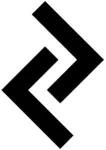
ALTERNATE NAMES: Jeran Rune
The Jera rune is an ancient European runic symbol, part of the runic alphabet. It also symbolizes concepts such as the harvest or the passage of time.
German ultranationalists of the pre-Nazi period began appropriating various runic symbols to help them create a link to a mythic “Aryan” past; from the 1920s through the 1940s, the Nazi party took such runic appropriation to a new level, incorporating many runic designs into Nazi iconography and symbology. Because the Nazis had done so, later neo-Nazi groups continued the tradition, adopting various runic symbols as logos, including symbols the Nazis themselves did not use.
The Jera rune is one of the less common runic symbols appropriated by modern white supremacists, perhaps because the Nazis do not appear to have used it. In the 2010s, however, white supremacists in Europe and the United States began to use the symbol. In Sweden, for example, the National Youth League (Förbundet Nationell Ungdom), a neo-Nazi group, adopted the Jera rune as its logo. In the United States, the rune began to appear on flyers and cards associated with the alt right segment of the white supremacist movement.
Some white supremacists may use the symbol because its design can conjure the image of a swastika without the symbol actually being a swastika.
Because the Jera rune is used by non-racists as well, including by adherents of modern pagan religions such as Asatru, one should not assume use of the symbol is racist but instead should only judge the symbol carefully in its specific context.
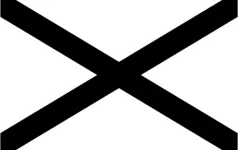
ALTERNATE NAMES: Southern Nationalist Flag, Black Cross
The League of the South is a longstanding neo-Confederate white supremacist group that advocates for a white-dominated, independent South. It originated in the mid-1990s as an organization that typically employed coded racism but took a sharp turn into explicit white supremacy and anti-Semitism in the 2010s.
The logo of the League of the South is the so-called “Southern Nationalist Flag,” created in 2013 by a League member. The design features a black cross—meant to resemble the St. Andrew’s Cross on the Confederate flag—against a white background.
A League-associated social media page claims that the color white in the flag stands for “European heritage, hierarchy, tradition,” while the black stands for “nationalism.” It also claims that “the ‘X’ shape…recalls the Roman numeral X (10), which in French is written as ‘dix,’ as in ‘Dixie.’”
The flag design has been adapted to fit shields, banners, lapel pins and other forms of display. Because some websites now sell versions of the flag as a “Southern Nationalist” flag rather than specifically a League flag, its usage may extend beyond strictly League members.
Alternate Names: NLYS
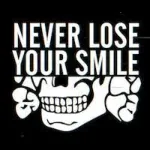
Never Lose Your Smile is a design/meme consisting of the phrase “Never Lose Your Smile” accompanied by the Totenkopf skull image or, more commonly, merely the bottom half of that skull, which obscures its true nature and thus allows the image to pass unnoticed as a white supremacist symbol. The deceptive nature of this design has also allowed extremists to sell clothing, patches, and other items featuring the image on major internet platforms without triggering moderation.
Some Never Lose Your Smile images may also contain the colors or designs of national flags. Other variations use Totenkopf imagery with a slightly different phrase, such as “Never Lose Your Love” or “Never Lose Your Hope.”
Some white supremacists have also used the phrase alone, without the skull, in circumstances such as screen names. However, use of the phrase by itself without a clear white supremacist context should not be taken for granted as hate-related.
White supremacists likely borrowed this concept from older, non-extremist designs that combined the phrase with non-Totenkopf skull images. Use of the “Never Lose Your Smile” slogan in combination with generic skulls or other non-white supremacist images, such as generic clowns, should not be considered hate related.