





Central Ohio Minutemen pose for a group picture. (Screenshot/Instagram)


Across the United States, militia groups are redefining how they identify themselves and each other, signaling a broader effort to soften their image and manipulate public perception. Research by the ADL Center on Extremism over the past year into many new militia groups shows they have eschewed the traditional “militia” moniker, especially those with younger members. While many groups continue to explicitly call themselves militias, others have embraced a new nomenclature and are using names such as “mutual assistance group” or “contingency group.”
These militia groups, like their older counterparts, still espouse an anti-government ideology with an emphasis on paramilitary training. While this rhetorical shift may seem cosmetic, the adoption of these new terms allows militia groups to camouflage their extremist ideology, sidestep public scrutiny and grow their networks both online and offline.
The Problem with “Militia”
Since the 1990s, groups have used the “militia” moniker to signal their participation in a movement that embraces an anti-government, conspiracy-oriented ideology and stresses armed paramilitary training. However, over the course of the movement's history, federal and state authorities have convicted many militia group members for a wide range of criminal activities, from amassing illegal arsenals to violent plots and attacks. The extreme acts of many of its members forever tarnished the reputation of the militia movement.
The movement’s negative image has also hampered the efforts of militia groups to build inroads with local communities because most community members have typically rejected them. Bob Herget, a leader of the York County Poquoson Community Mission in Virginia, has claimed that his local sheriff advised him to abandon the group’s former name, “York County Poquoson Constitutional Militia,” allegedly anticipating that the community would have a problem with the word “militia.” Similarly, in the fall of 2024, a chapter leader of the Yellowstone Militia—a Billings, Montana-based Three Percenter militia group—stated to county commissioners during a meeting in which they volunteered to provide community “protection” that they “are not the bad militia that people. . . ha[ve] made it out to be” and that there is an “unfortunate history of the word militia.”
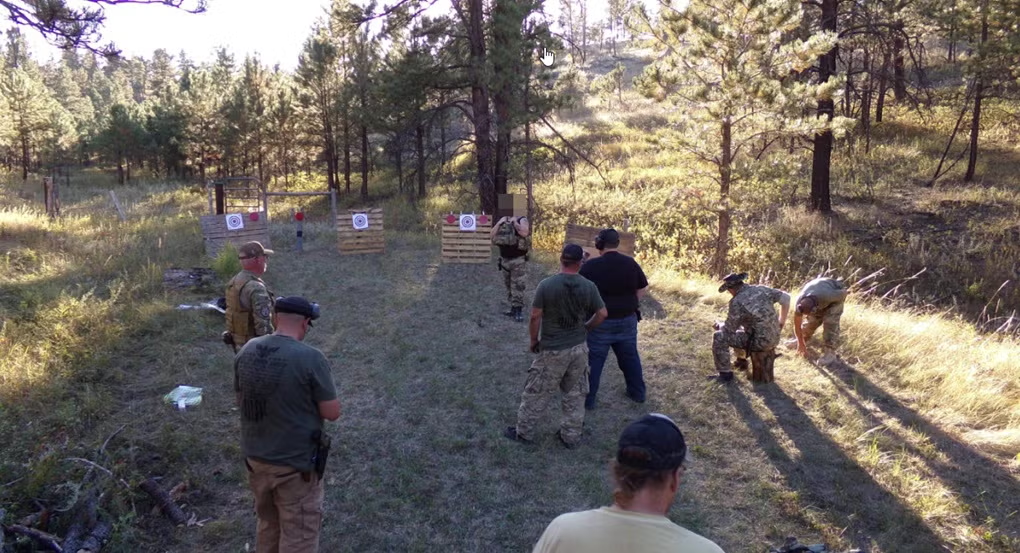
Yellowstone Milita field training exercise. (Screenshot/TikTok)
These emerging names haven’t just impacted the public perception of the movement, they have also affected their online organizing. In August 2020, Facebook—at the time, one of the primary organizing hubs for the militia movement—announced that it was removing militia groups along with QAnon spaces from its platform because of their widespread violent rhetoric and celebration of violent acts that occurred during the George Floyd protests taking place across the U.S. at the time. This move greatly impeded the ability of militia groups to operate online.
The adoption of new terminology allows militias to evade content moderation and create new safe havens on mainstream social media to promote their anti-government ideology, grow their network and translate online activities into real-world action. As a result, these militias have attracted hundreds — and at times thousands — of followers on their accounts.
This access to mainstream social media platforms has allowed militias to gain visibility among mainstream audiences. For example, many of these militias are operating on Instagram, where they interact on posts detailing training exercises and recruitment efforts, often showcasing joint paramilitary training with other militia groups they connect with on the platform.
The Virginia-based Central Virginia Irregulars (CVI) militia—which was founded in 2023 and also calls itself a “mutual assistance group”—exemplifies this trend. In an April 2025 Instagram post, CVI tagged and urged militia groups to connect with potential recruits as they claimed to have received an influx of “group information” requests. The post received comments from at least 10 other militia groups.
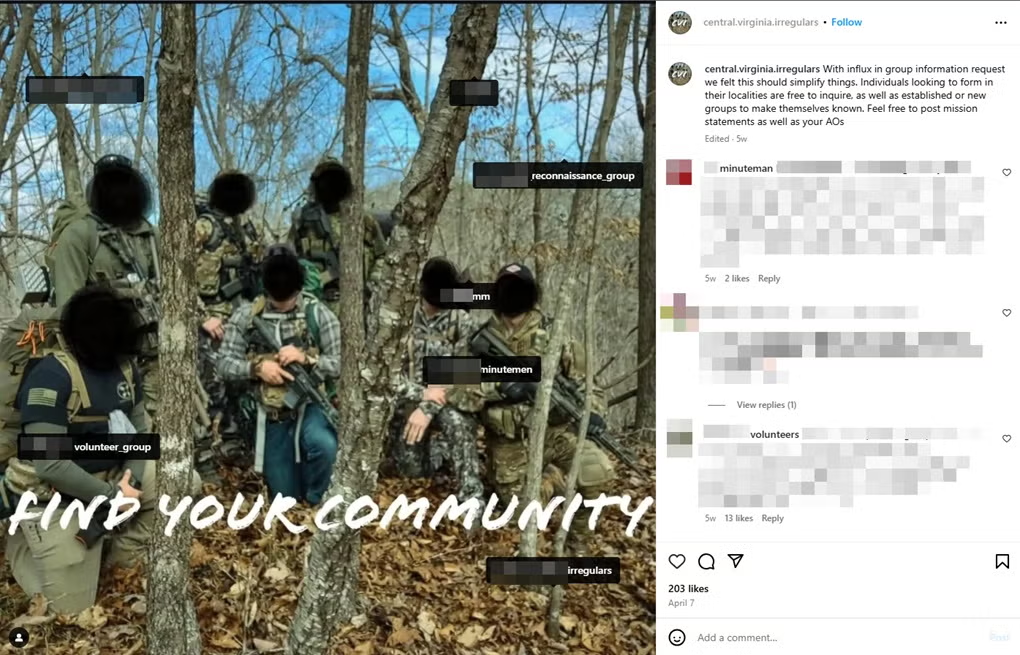
An Instagram post from April 7, 2025, by the Central Virginia Irregulars tagging other militia groups and requesting militias and those interested in joining them to discuss in their comments section. (Screenshot/Instagram)
Their tagging efforts in the post are part of a broader strategy on the platform to gain the attention of other militia groups both regionally and nationally. This drives engagement on their account and creates a ripple effect where militia groups will endorse each other and further spread their content on mainstream platforms.
New Names
While a number of militia groups continue to call themselves “militia” or use other historical names like “minutemen” and “irregulars,” many of the names of newer, emerging militia groups, such as “mutual assistance groups,” are adopted from the prepper/survivalist community. Historically, there has been a crossover between the militia movement and the survivalist community. By adopting names tied to these communities, militia groups attempt to appear benign, blend into more mainstream currents, and attract potential recruits. New militia groups have opted for many different names, with the most popular self-descriptions including:
These new names enable these militia groups to continue their old patterns of conducting organized paramilitary training and promote the same anti-government beliefs that have resulted in violence in the past.