




The mayor stayed away from the Israel Day Parade. I went because Jewish pride, peoplehood and Israel ties are not up for negotiation.
By Jonathan Greenblatt, ADL CEO
When Mayor Mamdani announced that he would skip New York City’s annual Israel Day Parade, he broke with a tradition that every mayor has honored since the event began in 1965 – standing shoulder to shoulder with members of the New York Jewish community at a parade celebrating their cultural heritage.
His absence wasn’t the result of some kind of scheduling conflict. It was an ideological assertion and a disgraceful one. This would be true at any time, but it is particularly notable at a time when New York Jews – and Jews around the world – find ourselves under threat to a greater degree than at any time since the Holocaust.
And tragically, when we are under siege, the city with the largest Jewish population in the world is governed by a mayor who gaslights us at every turn. At best, he pays lip service to confronting antisemitism. At worst, he deliberately fuels the fire.
It’s also very telling that on the day he skipped the march, Governor Hochul signed legislation that ADL championed to protect worshipers from harassment, intimidation and threats to our houses of worship. This follows Mamdani’s lack of support for similar efforts at the city level and his vetoing of local efforts to protect us against threats outside educational facilities.
Like tens of thousands of Jewish New Yorkers, I made a different decision from Mayor Mamdani. Simply put, I marched. In fact, I did so for the very first time because the moment demands that we stand up, with pride, and be counted.
Three distinct and worsening phases
ADL knows something about counting. We have been measuring antisemitic attitudes in the US since 1964. We have systematically tracked antisemitic incidents in America since 1979. Our research shows that the hatred we’ve witnessed over the past decade is not a single crisis or some statistical aberration but a cascading one whose three distinct and worsening phases have unfolded before our eyes.
The first phase was the mainstreaming of antisemitism. As social media shattered the barriers that once relegated fringe views to the margins, extremists found massive new audiences. Conspiratorial rhetoric that once circulated in dark corners went viral. Hostile public actors – on the far right and the radical left – discovered that scapegoating Jews was a way to drive clicks and earn headlines. Social norms that had made overt antisemitism disreputable began to erode.
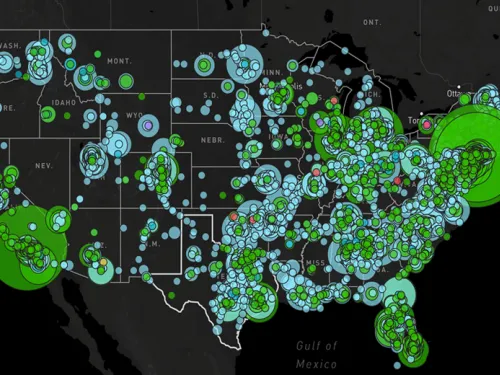
The second phase was normalization. After the Hamas massacre of October 7, 2023, the floodgates burst open in ways no one had expected. Before Israel even responded to the worst massacre of Jewish civilians since the Holocaust, many accused the country of committing genocide. Abhorrent behaviors — students harassed on campus, synagogues picketed, Jewish professionals blacklisted — started to appear hours after the attack and bizarrely were rationalized rather than rejected. In 2025, ADL recorded 6,274 antisemitic incidents across the US, a nearly 500 percent increase over the past decade.
Now we are at risk of entering a third, dangerous phase: institutionalization. Political organizations like the Democratic Socialists of America are working overtime to convert anti-Jewish prejudice into policy, basically making statements like “Israel has a right to defend itself” an expellable offense and endorsing candidates who treat Jewish identity as suspect. Some labor unions are hardening anti-Jewish bias into their platforms, and a few have even attempted to push out Jewish members unless they toe the line. Cultural institutions, media outlets, and professional associations are aggressively shutting out Jewish voices that don’t adhere to an antizionist narrative, even though such a position runs counter to our core beliefs.
A simple story
When Mayor Mamdani took office this past January, he did so, not as a seasoned public servant but as an adept activist who situated anti-Israel dogma at the center of his social media feed and his political narrative. In his appointments, statements and now his policies, he has labored to launder and legitimize antisemitism. It’s why he elevates the very few, extreme elements of the Jewish community with whom he agrees in order to point to “Jewish support.”
But here’s the thing. Neither Mayor Mamdani nor any elected official can tell us what it means to be a Jew. He doesn’t get to dictate the terms of our identity. Not now, not ever.
The march underscored this reality. I saw firsthand more than 50,000 loud, proud New Yorkers marching through midtown Manhattan. They waved American flags and Israeli flags. They radiated a joyful energy that celebrated our people’s connection to their ancestral homeland even as they extolled our community’s indispensable role in the American story.
Don’t be fooled by those who want to tell us what marching means or who took part. In that crowd, I met those who love the current Israeli government and those who do not. I encountered conservatives and progressives. I connected with religious and secular. I fist-bumped with Jews and non-Jews.
Moreover, showing up wasn’t an endorsement of any Israeli administration nor a defense of any specific policy. It was a celebration of the very existence of the state of Israel, a country that represents the realization of a 2,000-year-old dream – that Jews could throw off the shackles of those who enslaved us, liberate ourselves from those who colonized us, and escape the clutches of those who persecuted us and regain sovereignty in our ancestral homeland.
This should not be a controversial position. The world recognizes a wide range of countries forged in a dizzying array of circumstances. There are authoritarian theocracies like Iran and absolutist monarchies like Qatar; electoral autocracies like Turkey and colonial patch-ups like Lebanon. In contrast, a pluralistic democracy like Israel may be imperfect, but it is a far more equitable and humane enterprise than its neighbors.
In fact, here is the bitter irony: in harassing and attacking Jews for their Zionism, anti-Israel bigots actually make the case for Zionism. They remind us that a double standard for Jews remains alive and dangerous. Their seething, irrational hatred reinforces our resolve that Jewish security can never be assumed.
Mayor Mamdani may think he is undermining our community by boycotting the Israel parade. But his actions paradoxically vindicate the very logic of a state whose founders fled horrors so singular that history gave them their own names — pogroms, the Farhud, the Holocaust. His unapologetic bias doesn’t weaken our Zionism; it steels it.
I wonder whether the mayor has grasped that, whether he likes it or not, our identity won’t bend to his cynical agenda. It will endure beyond every election cycle and four-year term. It will outlast every political operative who thinks Jewish peoplehood is something to be managed or manipulated with slick social media posts and clever doublespeak.
I marched yesterday for all these reasons. I marched to send an unmistakable message. I marched to tell a simple story: the Jewish people are here, we have no fear, and we aren’t going anywhere.
Am Yisrael Chai.
Jonathan Greenblatt is CEO and National Director of ADL. This article originally appeared in The Times of Israel.