







iStock



Online games have revolutionized the way we connect, compete and experience the world, captivating millions of adults and young people in thrilling virtual adventures that know no boundaries. In fact, the global player base for video games was estimated to reach 3.6 billion people in 2025 and predicted to reach 3.9 billion by 2028. In particular, teenagers are using video games at higher and higher levels. According to a 2024 Pew study, 85% of teenagers in the United States report playing video games. 72% of those teens say that they play video games to socialize.
Video games can enhance cognitive skills in young people by improving problem-solving abilities, critical thinking and spatial awareness through engaging, interactive challenges. Multiplayer and cooperative games foster social connections among young people, helping them build teamwork, communication skills and meaningful friendships both online and in person.
However, users also report experiences with online hate and harassment in video games. In recent years, ADL has reported that over 100 million people in the US play online multiplayer games, of which 83 million were exposed to hate and harassment. And Pew reports that 80% of teens view harassment in videogames as a “problem for people their age,” with 41% reporting being called an offensive name in the game.
Parents and caregivers should be aware that hate, bias and harassment can arise in video games and online spaces—and be prepared to have proactive conversations with their children and know how to respond when it happens. One important tool to learn about the policies and practices of various gaming companies is through ADL’s 2026 Online Gaming Leaderboard—the first independent rating system created to evaluate the safety of online games for the US public.
The ADL Online Gaming Leaderboard evaluates video game companies on their efforts to curb antisemitism and hate through robust policies and proactive, in-game safety features. This assessment serves as a comparative audit of the industry's leading platforms and games to identify critical gaps in moderation and player protections. The scorecard evaluates Minecraft, Roblox, Valorant, Fortnite, Grand Theft Auto Online, Madden NFL, Counter-Strike 2, Clash Royale, Call of Duty and PUBG: Battlegrounds, and offers best practices to companies.
This scorecard evaluates the in-game safety tools available to users and the hate prevention policies that each game uses to prevent antisemitism and other forms of hate during in-game interactions. The research does not assess or opine on other aspects of the games themselves, including genre, gameplay mechanics, use of weapons or violence, narrative content, artistic design, or overall suitability for players. Researchers evaluated topics like policy (i.e. policies against hateful behavior and antisemitism), in-game tooling (i.e. the ability to block, mute and report players), parental controls, appeals processes, etc. in order to determine safety strengths, safety gaps and suggestions for improvement for different gaming companies.
The scorecard was created in part due to previous ADL research into identity-based harassment in online gaming. ADL research from 2022 found that three out of 10 Jewish gamers in the U.S. have been targeted for antisemitism in online multiplayer games. A 2025 ADL study led by Dr. Kat Schrier of Marist College further demonstrated the hostility: researchers played several games with usernames like “ProudtobeJewish” and found that simply showing up in a game with that username led to antisemitic harassment almost 40% of the time during one-hour sessions. This rate was on the higher end compared with hate directed at players with usernames reflecting other types of identity categories.
ADL’s Online Gaming Leaderboard addresses that gap by providing the most comprehensive evaluation of safety measures in online multiplayer games to date. It offers an ongoing look at how gaming companies manage their online multiplayer ecosystems, with a critical emphasis on how they address antisemitism and extremism.
Online hate is defined as: “An attack against people or groups based on their actual or perceived race, ethnicity, national origin, religion, gender, gender identity, sexual orientation, (dis)ability, immigration status, etc. that occurs in digital social spaces through the use of technology, such as computers, cell phones and other electronic and digital devices.”
While online hate and harassment are not unique to the gaming world, in 2023 ADL’s Center for Technology and Society found in their Hate is No Game report that:
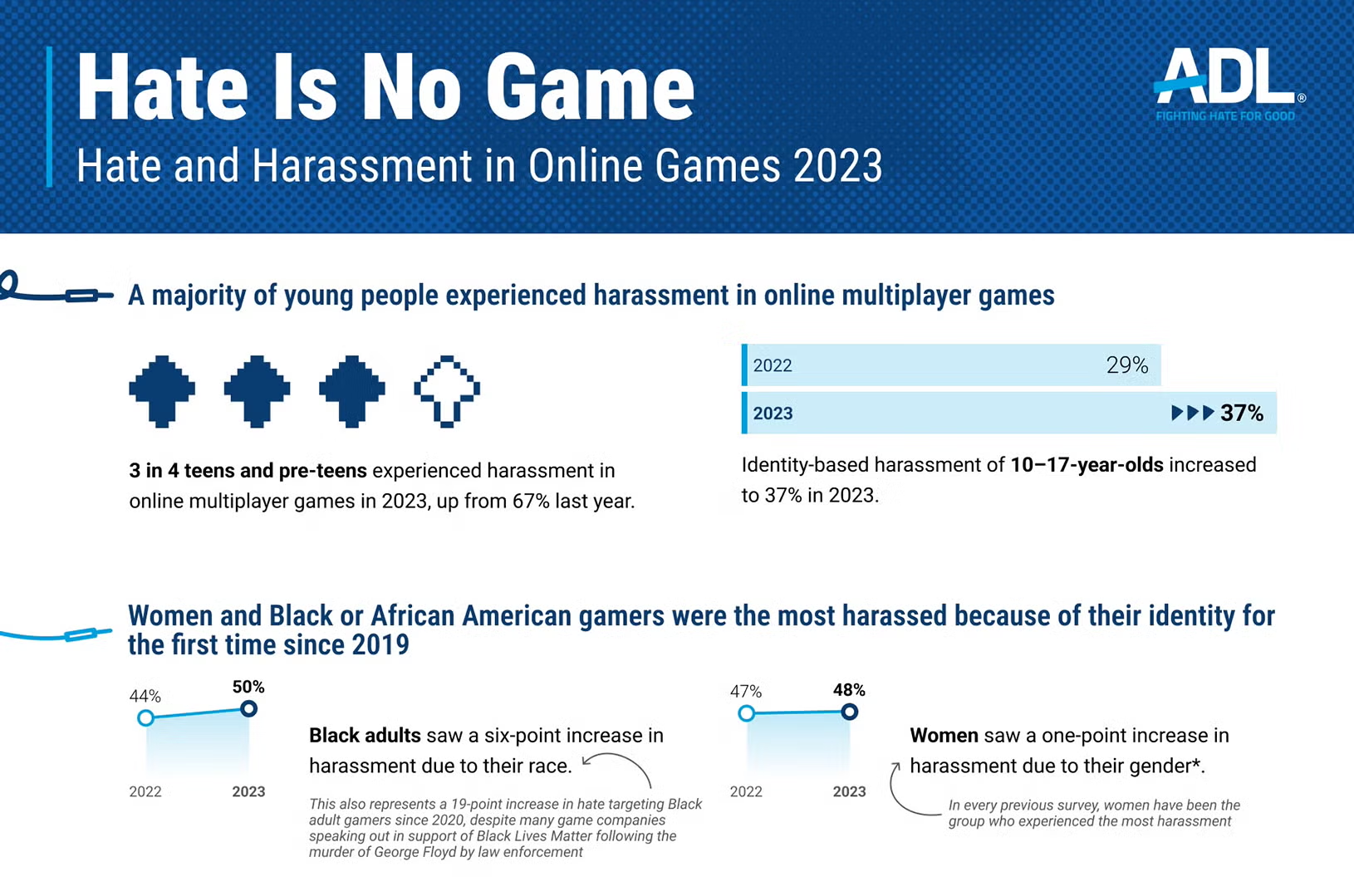
Exploring the ADL Online Gaming Leaderboard offers parents and caregivers information on the online safety features from different major players in the videogames industry. Parents and caregivers can then utilize such information and key takeaways to engage in conversation about safety in online and gaming spaces, digital practices and how to stand up against hate and harassment in online multiplayer games. The scorecard offers a starting point—the concrete data and evaluation of different gaming companies and platforms for adult audiences—but you as a family have the opportunity to converse about the highlights and how to make the most informed decisions about navigating online multiplayer games.
(Note to parents/caregivers: Because the topic of bias and hate in online games is a current societal issue as well as a topic that may impact your family directly, engage in this conversation on one or both levels, whichever makes sense for your family.)
Ask: What can we do to help? What actions might make a difference?
Remember, you can always report experiences of hate and harassment in gaming spaces to ADL’s Incident Response form for additional assistance, resources and guidance.