





(Andrej Ivanov/Getty Images)
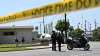
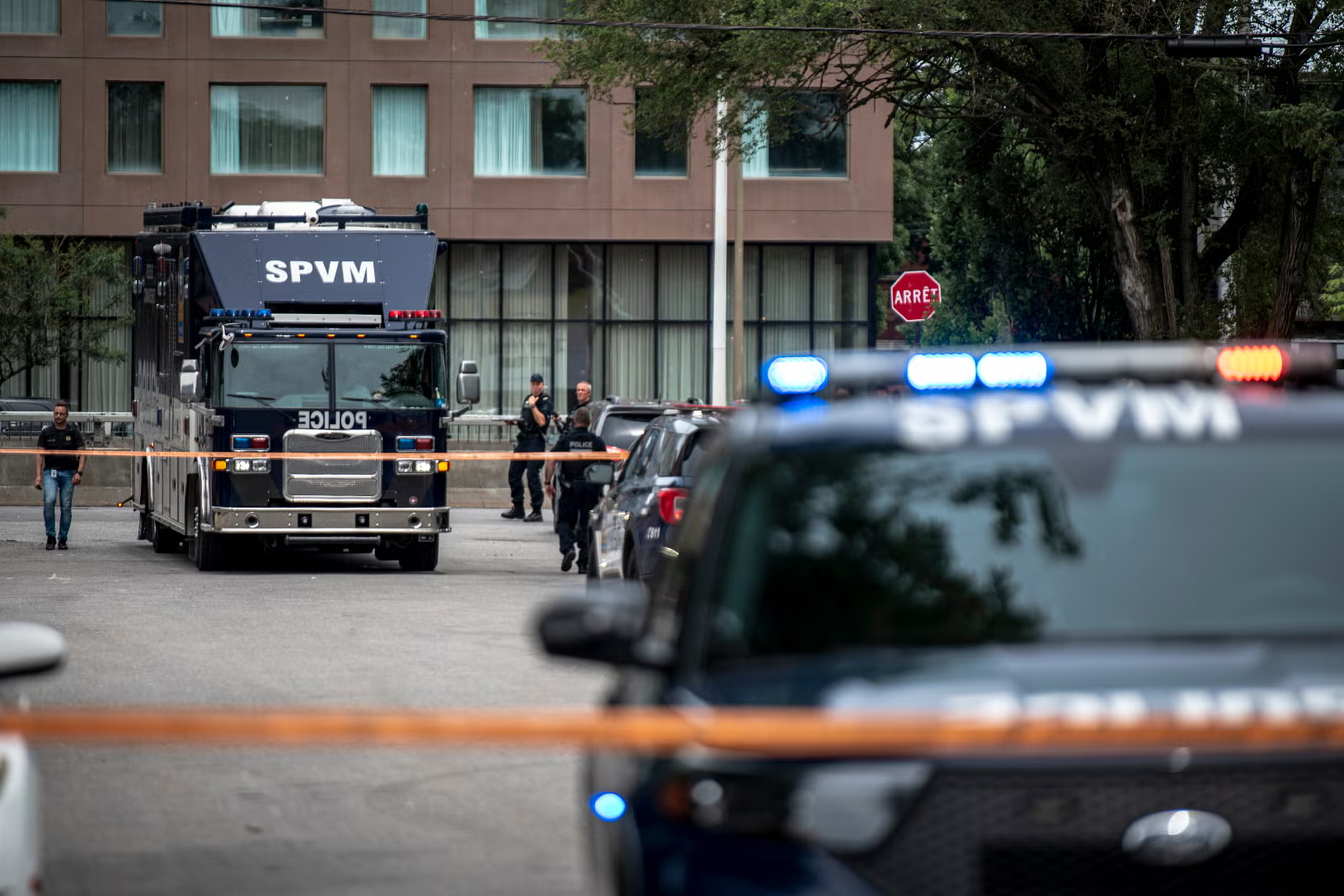
Police near the scene of an active shooter situation on June 22, 2026, in Montreal, Canada. According to reports, a police officer was killed in a shootout, and a suspect was also killed at the scene.
(Andrej Ivanov/Getty Images)
Police near the scene of an active shooter situation on June 22, 2026, in Montreal, Canada. According to reports, a police officer was killed in a shootout, and a suspect was also killed at the scene.
A shooter opened fire in Montreal’s Côte-des-Neiges neighborhood on June 22, resulting in two deaths and one injury before responding law enforcement killed the perpetrator.
The perpetrator was identified by law enforcement as a 25-year-old Canadian man; whether or not the shooter selected specific targets is unknown. ADL analysis of a lengthy manifesto reportedly left behind by the shooter reveals a range of extremist views, including antisemitism, incel-linked ideas, and anti-capitalist beliefs, including:
This incident follows a disturbing pattern that ADL has closely tracked for years: Mass shooters are often motivated by a range of extremist beliefs, and antisemitism is often part of their apparent worldview. Even when Jews or Jewish institutions are not the intended targets, antisemitic conspiracy theories and tropes frequently appear in attackers’ writings, online activity, and stated motivations. Antisemitic beliefs are often a warning sign of broader extremist worldviews. Conspiracy theories about Jewish or Zionist control, influence, or power are often used by extremists to justify violence against a wide range of perceived enemies, making antisemitism a critical indicator for understanding and preventing acts of mass violence.
In just the last six weeks, there have been two other cases that illustrate the complex nature of these threats. Seven people were arrested in June in connection to a plot to carry out a mass-casualty attack at UFC Freedom 250. The defendants allegedly drew from a volatile mix of accelerationism, antisemitism, anti-government conspiracism and anti-elite grievance.
A few weeks earlier, two teen gunmen attacked the Islamic Center of San Diego in May, killing three people. Their manifesto expressed hatred for Muslims, but also for Jews, Black people, Hispanic people, and the LGBTQ+ community, while positioning their attack as a tribute to the 2019 white supremacist Christchurch killer.
This is not a new phenomenon, as the 2022 Tops supermarket shooting in Buffalo, New York, poignantly underscores the complex nature of these threats. There, a gunman killed 10 and injured three in a Tops supermarket in a predominantly Black neighborhood. The shooter's ideology was explicitly motivated not only by white supremacist beliefs, but also by antisemitic and accelerationist ones. His gun included references to “Black-on-White” crime, capturing a favorite white supremacist talking point.
Several other recent deadly incidents underscore the persistence of this threat: