



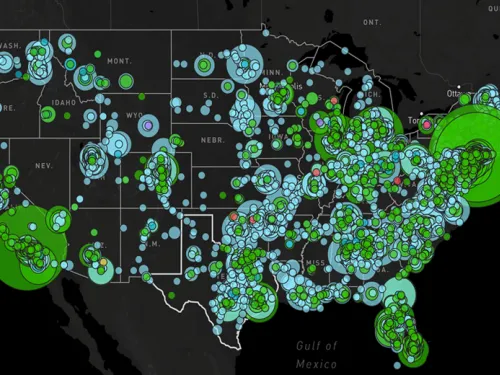

A summary of anti-Israel protests on university campuses on October 7, 2026.
156 Results
Back
Examining antisemitism, exclusion and representation in higher education unions, and how stronger democratic practices can better serve all members.

Examining trends in faculty-driven antisemitism and how classroom practices, academic structures and institutional dynamics shape Jewish student experiences.

IntroductionIn the classroom, educators are often looking to create spaces for discussion and learning about unfolding current events, like the ongoing Israeli-Palestinian conflict, October 7th and the subsequent Hamas-Israel War. Learning about any current events risks harmful incidents among students. However, there is also an opportunity for a meaningful and nuanced learning experience that may still cause discomfort or emotional reactions, but can create new…

IntroductionFeelings of fear, powerlessness and vulnerability are common experiences all people share whenever acts of hatred, terrorism, or mass shootings occur, and feelings are personally compounded when the events target a group with which members of the school community identify. Children and teens are not immune to these feelings, but adults can help by providing information that answers their questions, giving them opportunities to express how they feel, reassuring them that adults in…
A data-driven look at anti-Jewish bias, attitudes towards Israel, and campus climate, with implications for universities and institutional action.

ADL examined the strategic evolution of anti-Israel activism on U.S. campuses and provides recommendations for universities to respond proactively to changing tactics.
Educators can teach young people what antisemitism is, where it comes from and what it looks like today, so they can recognize and report it.
New research shows the Gringlas Unit effectively teaches students to recognize antisemitism as a recurring conspiracy theory, reducing belief in antisemitic tropes after just one lesson.

Surveyed faculty report widespread antisemitism on campuses and in associations, with growing professional, emotional, and mental health impacts.

ADL’s RAI and CCAE found high rates of antisemitism in independent K-12 schools, especially within curricula, with insufficient response from administrators.

Most Jewish students face antisemitism; over 25% of Jewish students said they had observed anti-Jewish activity from faculty. Rates of self-censorship of Jewish identity and views of Israel remain high.
Join the ADL Innovation Lab and partner with ADL to equip students with digital literacy skills to combat online mis- and disinformation that lead to hate.

ADDITIONAL TERMS FOR EDUCATORS: Generative Artificial Intelligence (GAI): Unlike more traditional AI systems, which are typically designed to recognize patterns in existing data and make predictions based on those patterns, generative artificial intelligence (GAI) systems are designed to produce new content in response to user prompts. These outputs can include text, images, audio or video content. Examples of popular GAI chatbots include Open AI’s ChatGPT and…

It’s critical that parents, caregivers and educators learn more about social media and how to support young people in their understanding of its power and limitations.
ProgramsUniversities increasingly rely on trainings for students, staff, faculty and administrators to address antisemitism and related forms of bias on campus. Whether a program is developed internally or delivered by an external provider, institutions benefit from taking a thoughtful, structured approach to reviewing content, pedagogy, and alignment with institutional values. The questions below are designed to support universities in evaluating whether a training is factually accurate,…

ADL's research and data on antisemitism provides a bridge between history, current events, and students' lived experiences. Explore the Global 100.

Don’t Feed the Lion: IntroductionDon’t Feed the Lion by Bianna Golodryga and Yonit Levi explores the story of antisemitism growing at Oakdale Middle School. The story begins with Theo Kaplan, a 13-year-old Chicago middle schooler and soccer captain. Theo’s world is turned upside down when his professional soccer idol, Wes Mitchell, makes an antisemitic comment that goes viral. The situation escalates when Theo discovers a swastika…

Every two years, we watch athletes compete on the world stage—and what captivates us isn't just the competition. It's the stories: the struggles, the triumphs, the personal journeys that help us see ourselves and others more clearly. The Olympics offer us a unique opportunity to explore something deeper: the complexities of identity—individual and national. When we bring these conversations into our classrooms, we're teaching students to see the human stories behind the…

Related ContentBackground Young people are using AI (artificial intelligence) tools every day for homework, curiosity, creativity, and social interaction. While we don’t have exact statistics on daily AI usage yet, recent Pew Research Center findings suggest that AI use begins to rise sharply by early adolescence, with widespread use among teens ages 13–17. While many see AI as a useful and credible source of information, it needs to be utilized critically and thoughtfully,…