




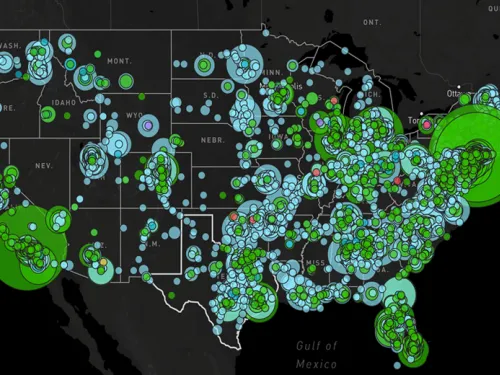

This new annual report from ADL & GLAAD documents extremist and non-extremist incidents of anti-LGBTQ+ hate in the United States.
36 Results
Back
They were ordinary people who lived extraordinary lives – or extraordinary people who put their lives on the line to protect the health and welfare of everyone.
In what has become an annual tradition, as the year comes to a close ADL pauses each December to take stock of the moments and people who shaped the last 12 months – for better, or for worse – with a Top 10 list.
For 2020, we compiled two Top 10 lists: One looking back on the moments of hurt and hate that…

Use this collection of classroom activities about holidays and observances to enhance students' understanding of our multicultural society and world.

March 12, 2021 THE WEEK’S BIG 3
Miami Heat center Meyers Leonard was fined $50,000, suspended from the team's facilities and banned from team activities after he uttered an antisemitic slur while playing video games. Israeli society is increasingly divided, with 81 percent of Israelis stating that they believe that their society is increasingly divided, a 12 percent increase since 2017, according to a new ADL. survey. A panel of South Carolina lawmakers stripped explicit protections…

The number 33 is used by Ku Klux Klan adherents to signify the Ku Klux Klan. Since the 11th letter of the alphabet is K, three Ks signify "KKK" or the Ku Klux Klan. When using this reference, Klan members will frequently add the number 6 at the end, as in 33/6, because they think the Klan is currently in its sixth historical "era." Less commonly, some holdouts may still use the numeric code 33/5. Additional Images:

AKIA is Ku Klux Klan shorthand for "A Klansman I Am." It is related to another Klan acronym, AYAK ("Are You A Klansman?"). These are among the many acronyms developed by the Second Ku Klux Klan that emerged in 1915. Although the Second Ku Klux Klan did not survive, much of its terminology and many of its rituals did, and later Klan groups freely used them. Additional Images:

AYAK is Ku Klux Klan shorthand for "Are You A Klansman?" It is related to another Klan acronym, AKIA ("A Klansman I Am"). These are among the many acronyms developed by the Second Ku Klux Klan that emerged in 1915. Although the Second Ku Klux Klan did not survive, much of its terminology and many of its rituals did, and later Klan groups have freely used them. Additional Images:

ALTERNATE NAMES: Ku Klux Klan, MIOAKGroup Status: Active (in that there are many active Ku Klux Klan groups)
For the past century, the primary symbol related to Ku Klux Klan groups (other than Klan robes themselves) is what Klan members may call the MIOAK (an acronym for "Mystic Insignia of a Klansman"). It is more commonly referred to as the "Blood Drop" Cross. It appears as a square white cross in black outline against a circular red background. In the middle of the cross is what appears…
ALTERNATE NAMES: Ku Klux Klan, MIOAK
Read more about Blood Drop Cross

The image of the burning cross is one of the most potent hate symbols in the United States, popularized as a terror image by the Ku Klux Klan since the early 1900s. Cross-burnings (called "cross-lightings" by Ku Klux Klan groups, to make it seem as if they are not destroying a Christian cross) have long been used as a traditional symbol by Klan groups, used both in Klan rituals as well as in attempts to intimidate and terrorize victims of Klan groups. So widely associated with racial…

ALTERNATE NAMES: For God, Race and NationFGRN is a Ku Klux Klan acronym for "For God, Race and Nation," a common Klan slogan. It is one of a number of slogans, codes and rituals created by the Second Ku Klux Klan in the early 20th century. That Klan did not survive, but many of its codes and rituals were adopted by later Klan groups. In acronym form, the slogan is used primarily as a Klan identifier, typically appended at the end of on-line messages and postings. Additional Images:
ALTERNATE NAMES: For God, Race and Nation
Read more about FGRN

ITSUB is a Ku Klux Klan acronym for "In The Sacred Unfailing Being," a reference to God. It is one of many Klan acronyms created by the Second Ku Klux Klan that emerged in 1915. That Klan did not survive, but subsequent Ku Klux Klan groups continued many of its rituals and codes. Today, ITSUB has no real meaning or particular purpose and is typically used by Klan group members in on-line messages or posts solely as a way to identify themselves with the Ku Klux Klan. This has been the fate of a…

KABARK is a Ku Klux Klan acronym for "Konstantly Applied By All Regular Klansmen." It is one of many acronyms and codes developed by the Second Ku Klux Klan in the early 20th century. The Second Ku Klux Klan did not survive, but later Klan groups continued many of its codes and rituals. Today, KABARK is essentially meaningless and only used as a "sign off" in on-line messages by Klan group members, along with several other similar archaic acronyms. Additional Images:

KIGY is Ku Klux Klan shorthand for "Klansman I Greet You." It is one of many acronyms developed by the Second Ku Klux Klan that emerged in 1915. Although the Second Ku Klux Klan did not survive, much of its terminology and many of its rituals did, and later Klan groups freely used them. Additional Images:

KLASP is a Ku Klux Klan acronym for "Klannish Loyalty, A Sacred Principle." It is one of many Klan acronyms created by the Second Ku Klux Klan that emerged in 1915. That Klan did not survive, but subsequent Ku Klux Klan groups continued many of its rituals and codes. Today, KLASP has no real meaning or particular purpose and is typically used by Klan group members in on-line messages or posts solely as a way to identify themselves with the Ku Klux Klan. This has been the fate of a number of…

From its beginnings in the 1860s, the Ku Klux Klan has employed a variety of salutes and hand signs both public and private. Most of the hand signs and gestures used by the first and second Ku Klux Klans have fallen by the wayside over the years, except for the Klan salute, which dates back to 1915. It resembles a Nazi salute (which some Klan members will also use), except that it is performed with the left arm. Often Klan members will separate the fingers of their hand when making the salute …

The hood and robes of Ku Klux Klan members are the most visible Klan symbol of all. Read about the history and current meanings behind the Klan’s robes.

LOTIE is a Ku Klux Klan abbreviation for a "Lady Of The Invisible Empire," i.e., a female Klan member. It is one of many codes, phrases and rituals created by the Second Ku Klux Klan in the early 20th century. The Second Klan did not survive, but later Klan groups adopted many such codes and rituals, including LOTIE. Additional Images:

ALTERNATE NAMES: NSSANon Silba Sed Anthar is a Ku Klux Klan slogan intended to mean "Not Self, But Others." It looks like Latin but is a mix of Latin and Gothic. Occasionally it appears in acronym form as NSSA. The phrase is one of many phrases, codes and rituals developed by the Second Ku Klux Klan in the early 20th century. The Second Klan did not survive, but later Klan groups adopted many of its trappings. This is one of the more commonly used Klan slogans. Additional Images:
ALTERNATE NAMES: NSSA
Read more about Non Silba Sed Anthar

The triangular Ku Klux Klan symbol looks like a triangle within a triangle but is actually three letter K's aligned in a triangle and facing inwards.

Civics Lesson
GRADE LEVEL: High School What Were the Multiple Perspectives of the Justices of the U.S. Supreme Court Based on During the Repeal of DOMA?
According to the Supreme Court Decision, Who Has the Right to Marry?
What Assurances Do We Have that the Justices of the U.S. Supreme Court are Able to Be Non-partisan and Avoid Bias When Deciding a Case?
The Judicial branch of the U.S. government is headed by the Supreme Court. This court analyzes and judges cases…