






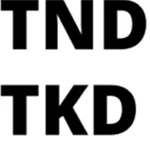
TND and TKD are abbreviations for (respectively) racist and antisemitic slogans referring to the mass death or killing of Black people and Jews.
233 Results
Back

ALTERNATE NAMES: YWNRU, Jews Will Not Replace Us
“You Will Not Replace Us” is a white supremacist slogan that became popular in early 2017, as did its acronym version, YWNRU. The slogan appeared on White supremacist flyers, banners and graffiti in a variety of places in the first six months of 2017, gaining wider attention when white supremacists used the phrase at several rallies held in Charlottesville, Virginia, culminating in the large and violent Unite the Right event in August 2017.
The slogan is a reference to the popular white supremacist belief that the white race is in danger of extinction by a rising tide of non-Whites who are controlled and manipulated by Jews (in fact, one variant of “You Will Not Replace Us” is “Jews Will Not Replace Us”).
“You Will Not Replace Us” may have been derived in part from “The Great Replacement,” a theory promoted by French writer Renaud Camus in a 2012 book of the same name. Camus argued that Europe was being overrun by mass migration of black and/or Muslim immigrants from outside Europe, who would replace traditional European culture with their own “alien” culture. Such arguments evolved into “replacement theory,” which became popular with the far right in several European countries, especially among Identitarians. Replacement theory was promoted as early as 2015 by American white supremacist groups such as Generation Identity U.S.A.
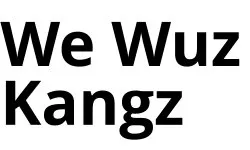
ALTERNATE NAMES: We Wuz Kings, Kings N Shiet
“We Wuz Kangs” is a racist catchphrase and collection of memes directed at African-Americans and other people of sub-Saharan African descent. Originating in 2015 and popularized by the website 4chan, the phrase is a racist shorthand reference to discredited but popular Afrocentric theories that claimed sub-Saharan Africans were descended from ancient Egyptians.
The phrase and meme are intended to mock the Afrocentric theories and, by extension, anyone who might believe in them. Users employ phrases such as “We Wuz Kangs,” “We Wuz Kings,” and “Kings N Shiet,” featuring mock black American dialect that is intended to portray blacks as ignorant and a contrast to the ostensibly more civilized ancient Egyptians. Meme versions of the phrase similarly tend to feature images with racist stereotypes of black people, often contrasted with images of Egyptian pharaohs. The overall intent is to portray blacks as crude, ignorant and uncivilized.
Memes featuring the phrase often include an image of an African leader taken from The African Kingdoms expansion of the video game Age of Empires II, which debuted around the time the meme was created in 2015. Usage of the meme seemed to increase with the release of the popular movie Black Panther in 2018.
ALTERNATE NAMES: WAU
Group Status: Current
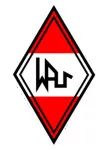
Women for Aryan Unity (WAU) is a longstanding white supremacist group, founded in 1990, notable for being one of the only female-only white supremacist groups of recent decades. WAU promotes and supports women in the white supremacist movement, typically from a traditionalist vantage point, with content in its newsletters and websites focusing on “women’s” issues, such as raising children.
WAU has also long provided support to white supremacist prison inmates, particularly those viewed as “prisoners of war,” i.e., inmates whose crimes were related to their white supremacist ideology. In particular, WAU has supported the imprisoned members of The Order, aka Brüder Schweigen, a violent 1980s white supremacist terrorist group, providing an outlet for their writings and creating an “Adopt a Brüder” campaign to raise money to give to jailed Order members.
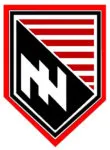
WAU’s logo is a diamond featuring stylized letters spelling “WAU.” The interior of the diamond also features two red stripes and one white stripe. The red-black-white color scheme uses the color scheme of the Nazi flag. Most WAU members practice racist versions of modern Norse paganism and thus may use many Norse pagan symbols as well.
Though started in the United States, for most of its history WAU has also had chapters in other countries; current chapters include Australia, Argentina, Italy and Spain. The logo of WAU’s Argentina chapter replaces the red-black-white color scheme with a blue-white color scheme based on the flag of Argentina.
ALTERNATE NAMES: Da Goyim Know
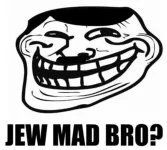
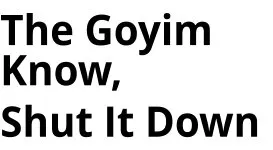
“The Goyim Know” is an antisemitic catchphrase, used by itself or combined with the related phrase “shut it down,” as in “Oy vey, the Goyim know! Shut it down!” An alternate version is “Da Goyim Know.” It is most associated with the alt right segment of the white supremacist movement and message boards such as 4chan and 8chan.
The language is typically used in references to antisemitic conspiracy theories depicting Jews as malevolent puppet-masters, manipulating the media, banks, and even entire governments to the benefit of themselves but to the detriment of other peoples. The phrase is intended to be understood as spoken by a panicked Jew responding to some occurrence that would ostensibly reveal Jewish manipulations or deceit to non-Jews (i.e., “goyim,” a disparaging Yiddish and Hebrew word for non-Jews).
The implied Jewish speaker in the catchphrase is thus urging fellow Jews to shut down that particular manipulation or deceit and move on to something else. “Can’t let the gullible goyim know that they are supporting free cellphones and internet connections to the boys in the hood,” reads one typical posting from 2012 on the white supremacist website Stormfront. “The Goyim know” meme originated as mocking shorthand for this type of language.
The earliest known references to “The Goyim Know/Shut It Down” appeared in 2013, apparently originating on the discussion forum 4chan. The phrases quickly spread to social media. The meme became more popular in 2014 after an antisemitic song parody featured the phrase. Soon the meme became a staple of online antisemitism.
It didn’t take long before the phrase entered the physical world. In 2017, white supremacists appeared with signs featuring the phrase “The Goyim Know” at several events around the country, including the August 2017 “Unite the Right” rally in Charlottesville, Virginia. The intent behind the “The Goyim Know” signs seemed to be to demonstrate that white supremacists were aware of the conspiracies in which Jews were ostensibly involved.
ALTERNATE NAMES: Archangel Michael's Cross, Iron Guard
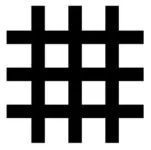
St. Michael’s Cross, despite its name, is not a traditional Christian symbol but rather a fascist symbol designed by Corneliu Codreanu (1899-1938), a Romanian right-wing extremist who led the Iron Guard/Legion of St. Michael movement (also known as the Legion of the Archangel Michael) in the 1920s and 1930s. This symbol became the Iron Guard’s logo until the movement was destroyed during World War II.
The Iron Guard combined fascism, nationalism, Eastern Orthodox Christianity and anti-Semitism. Its symbol, St. Michael’s Cross, consists of three vertical lines and three horizontal lines arranged in a hashtag-like pattern. The design was intended to resemble both a cross as well as stylized prison bars; Codreanu was allegedly inspired by either an icon or a vision of St. Michael during his time in prison in the 1920s. The color green is also often associated with the Iron Guard, because of the green uniforms worn by its members (sometimes called “Green Shirts”).
After the end of World War II, right-wing extremists in Western Europe resurrected many of the symbols of fascist movements of the interwar era; following the collapse of communism in Eastern Europe, a similar process occurred in that region. In Romania, right-wing extremists revived St. Michael’s Cross.
Unlike many other fascist or Nazi symbols originating in Europe, the St. Michael’s Cross symbol did not spread much overseas. In the late 2010s, however, some American white supremacists – most notably Matthew Heimbach, who headed a short-lived neo-Nazi group called the Traditionalist Worker Party – “discovered” Codreanu and the Iron Guard, as well as its symbology. Like Codreanu, Heimbach was an avowed adherent of Eastern Orthodox Christianity. A few other American white supremacists trying to blend traditional Christianity with their racist and anti-Semitic beliefs also discovered Codreanu, whose memoirs had been translated into English.
The St. Michael’s Cross symbol received more attention in 2019 following Australian white supremacist Brenton Tarrant’s deadly shooting spree targeting two mosques in Christchurch, New Zealand. Tarrant had painted white supremacist and anti-Muslim symbols and references on various firearms and ammo magazines that he brought with him on his rampage; one of the firearms featured a version of St. Michael’s Cross.
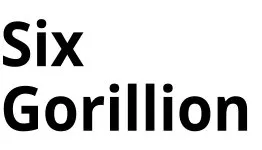
ALTERNATE NAMES: Muh Six Gorillion
The term “Six Gorillion” or “Muh Six Gorillion” is an antisemitic reference associated primarily with the alt right segment of the white supremacist movement. It entered common use by anti-Semites and white supremacists in 2013 and has been increasingly popular thereafter.
Both variations of the phrase refer to the approximately six million Jews who were killed during the Holocaust. The phrase replaces “million” with the nonsensical “gorillion” to convey the impression that Jews wildly exaggerate the number of people who died during the Holocaust.
The variation “Muh Six Gorillion” employs the slang word “muh,” a version of “my” meant to convey whining or complaining; references to “Muh Six Gorillion” are intended to suggest that Jews whine or complain about the Holocaust, including gratuitously bringing up the Holocaust in order to deflect criticism. This usage is also a variant of the antisemitic phrase “Muh Holocaust.”
ALTERNATE NAMES: Southern Nationalist Flag, Black Cross
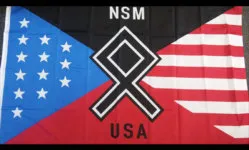
The League of the South is a longstanding neo-Confederate white supremacist group that advocates for a white-dominated, independent South. It originated in the mid-1990s as an organization that typically employed coded racism but took a sharp turn into explicit white supremacy and anti-Semitism in the 2010s.
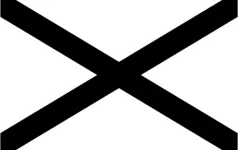
The logo of the League of the South is the so-called “Southern Nationalist Flag,” created in 2013 by a League member. The design features a black cross—meant to resemble the St. Andrew’s Cross on the Confederate flag—against a white background.
A League-associated social media page claims that the color white in the flag stands for “European heritage, hierarchy, tradition,” while the black stands for “nationalism.” It also claims that “the ‘X’ shape…recalls the Roman numeral X (10), which in French is written as ‘dix,’ as in ‘Dixie.’”
The flag design has been adapted to fit shields, banners, lapel pins and other forms of display. Because some websites now sell versions of the flag as a “Southern Nationalist” flag rather than specifically a League flag, its usage may extend beyond strictly League members.
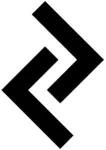
ALTERNATE NAMES: Jeran Rune
The Jera rune is an ancient European runic symbol, part of the runic alphabet. It also symbolizes concepts such as the harvest or the passage of time.
German ultranationalists of the pre-Nazi period began appropriating various runic symbols to help them create a link to a mythic “Aryan” past; from the 1920s through the 1940s, the Nazi party took such runic appropriation to a new level, incorporating many runic designs into Nazi iconography and symbology. Because the Nazis had done so, later neo-Nazi groups continued the tradition, adopting various runic symbols as logos, including symbols the Nazis themselves did not use.
The Jera rune is one of the less common runic symbols appropriated by modern white supremacists, perhaps because the Nazis do not appear to have used it. In the 2010s, however, white supremacists in Europe and the United States began to use the symbol. In Sweden, for example, the National Youth League (Förbundet Nationell Ungdom), a neo-Nazi group, adopted the Jera rune as its logo. In the United States, the rune began to appear on flyers and cards associated with the alt right segment of the white supremacist movement.
Some white supremacists may use the symbol because its design can conjure the image of a swastika without the symbol actually being a swastika.
Because the Jera rune is used by non-racists as well, including by adherents of modern pagan religions such as Asatru, one should not assume use of the symbol is racist but instead should only judge the symbol carefully in its specific context.

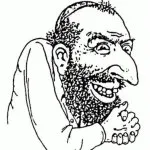
ALTERNATE NAMES: Jew Face, Merchant Face, Le Happy Merchant
The “Happy Merchant” is an antisemitic meme depicting a drawing of a Jewish man with heavily stereotyped facial features who is greedily rubbing his hands together. The meme is by far the most popular antisemitic meme among white supremacists, who have created a nearly endless series of images and variants featuring the “Happy Merchant.”
The meme originated with pen-and-ink artwork by a racist cartoonist who used the pseudonym “A. Wyatt Mann,” exposed by Buzzfeed reporter Joseph Bernstein in 2015 as actually being artist Nick Bougas (allegations of Bougas’ authorship had long predated Bernstein’s article). Mann became known for his grotesquely racist and antisemitic cartoons in the 1980s and 1990s, many of which first appeared in newsletters published by longtime white supremacist Tom Metzger.
The original cartoon featured the Happy Merchant image and a similarly bigoted drawing of an African American, as well as images of a rat and a cockroach. The cartoon contained a racist assertion that substituted the images for certain words to read: “A world without [Jews] and [blacks] would be like a world without [rats] and [cockroaches].” According to the Australian non-profit Online Hate Prevention Institute, this cartoon appeared on Metzger’s website at least as early as 2004 (its first appearance in print was likely earlier).
At some point—Bernstein suggests as early as 2001—someone cropped out all but the Jewish man from the cartoon and uploaded it to the Internet, where it became particularly popular on forums such as 4chan, whose users began modifying and spreading it. It eventually gained the name “Happy Merchant.” It has also been called “Le Happy Merchant,” “Merchant Face” and “Jew Face.”
The Happy Merchant has become nearly ubiquitous in modern online white supremacist and antisemitic iconography. A 2018 study by scholars examining memes displayed in various online communities determined that the Happy Merchant was among the most popular memes on both 4chan and Gab, two major online outlets for alt right expression.