




New York, NY, September 22, 2026 … On the the occasion of the 81st United Nations General Assembly High-Level Week, the J7 Large Communities’ Task Force Against Antisemitism issued the following statement:
A Defining Moment for the United Nations — and for the Fight Against Antisemitism
We are the J7 — the Large Communities' Task Force Against Antisemitism — representing the organized Jewish communities of Argentina, Australia, Canada, France, Germany, the United Kingdom, and the United States: the seven countries with the largest Jewish diaspora populations in the world.
This week, your governments are gathered in New York to address the most pressing challenges facing our world. Among the most consequential decisions you will make is the selection of the next Secretary-General of the United Nations. We write to you today because that decision matters deeply to our communities — and because we believe it represents an opportunity.
The United Nations was founded on the promise of equal dignity, human rights, and the protection of all peoples. Antisemitism — expressed through the conduct of mandate holders, in materials produced under the UN's emblem, and in a culture permitted to take hold in parts of the human rights system — is, however, among its serious failures. It damages the institution's credibility and undermines its standing to lead on human rights globally.
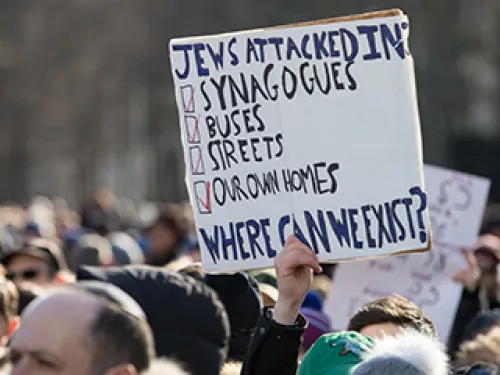
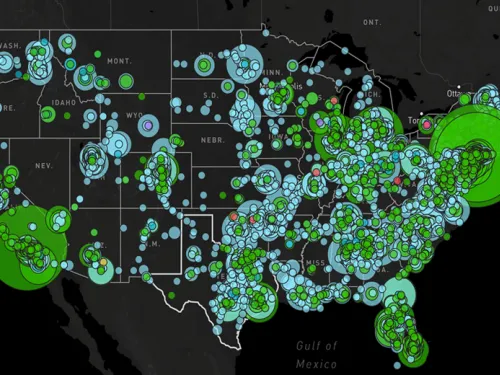
According to our own J7 Annual Report on Antisemitism, released in July 2026, 2025 was the deadliest year for antisemitic attacks in the Jewish diaspora in over 30 years: 20 people were murdered across J7 countries, antisemitic incidents exceeded 23,000, and total incidents are up 136% compared to 2022, the year before the Hamas attack on Israel. Jewish students across dozens of countries conceal their identity for fear of harassment. Jewish institutions operate under constant security threat. And yet within the very system charged with defending human rights, antisemitism has been normalized and even given platforms.
The UN is not external to this crisis. What happens under its emblem shapes attitudes and legitimizes narratives far beyond the chambers of Geneva and New York. That is precisely why the election of the next Secretary-General is so important — and why we are calling on your governments to treat it as the reform opportunity it is.
1. Elect a Secretary-General committed to restoring the UN's integrity.
The criteria your governments use to evaluate candidates must include a clear, demonstrated commitment to confronting the failures that have undermined the UN's credibility. Electing a Secretary-General who will treat this as a priority — not as a peripheral concern — is an important step member states can take this week.
We urge the next Secretary-General to integrate the IHRA Working Definition of Antisemitism, already adopted by more than 40 governments and major international institutions, into how the organization understands and responds to antisemitism, including all its contemporary manifestations.
One concrete step the new Secretary-General could consider is appointing a Special Envoy to Monitor and Combat Antisemitism — a fully resourced, stand-alone senior official, appropriately qualified in this field, empowered to address antisemitism within the UN system and to serve as an advocate for Jewish communities worldwide. At least 32 countries and major international institutions have already created such positions.
2. Drive system-wide reform, with accountability as its foundation.
The failures we are describing are systemic. They run through the whole of the UN, and most acutely expressed in the UN Human Rights system, whose outputs seep into the political discourse of member states and the daily experiences of Jewish communities worldwide.
The next Secretary-General should lead institutional-level reforms, including: establishing rigorous, transparent vetting processes for the appointment of officials and mandate holders across the full UN system — selection driven by expertise, impartiality, and fidelity to UN values, not by political transactions among blocs of states; creating enforceable accountability mechanisms — including formal audit processes, administrative review and disciplinary procedures — that enable the Secretary-General to track, assess and act on violations of conduct standards across all UN bodies and agencies; and building a credible, transparent and swift pathway to address and sanction repeated misconduct — including antisemitic rhetoric or conduct — without requiring the high threshold of a formal member state consensus resolution.
3. Ensure UN resources are never directed toward hate.
Member states must commit to ensuring that UN resources — funds, infrastructure, personnel, and institutional authority — are not used to support, endorse, or legitimize antisemitism, extremism or incitement in any form. This includes educational and outreach materials produced or distributed under UN auspices; the conduct of UN personnel; and mechanisms that single out people or one state for economic or reputational pressure in a manner applied to no other.
These failures have real consequences — for the Jewish communities our organizations represent, and for the credibility of the institution itself.
A Call to Action
We ask your governments to prioritize three things in the days ahead: the standards you set for the candidate you support; the commitments you seek before they take office; and the accountability you maintain once they do.
Our communities remain committed to the UN’s founding mission and want to see it succeed. We believe that with the right leadership and political will, this moment is a real opportunity. It is a chance to elect a Secretary-General who will make the fight against antisemitism a defining feature of their tenure, and to begin the work of restoring the integrity this institution was always meant to embody.
Signed,
DAIA — Delegación de Asociaciones Israelitas Argentinas (Argentina)
ECAJ — Executive Council of Australian Jewry (Australia)
CIJA — Centre for Israel and Jewish Affairs (Canada)
CRIF — Conseil Représentatif des Institutions juives de France (France)
Zentralrat der Juden in Deutschland — Central Council of Jews in Germany (Germany)
Board of Deputies of British Jews (United Kingdom)
ADL — Anti-Defamation League (United States)
Conference of Presidents of Major American Jewish Organizations (United States)
The J7, the Large Communities’ Task Force Against Antisemitism. was formed in response to increasing rates of antisemitism around the world and comprises major Jewish organizations in the United States, Canada, the United Kingdom, Germany, France, Argentina and Australia. In addition to top-level consultations, the J7 leads working groups comprised of subject matter experts from each community to develop strategies and action plans within areas such as policy and advocacy, tech policy, security, extremism and education against antisemitism.