




Assessment of 40 Museums found that 30 percent are Failing, receiving the Lowest Grading Category of “Critically Deficient.”
New York, NY, October 1, 2026 … ADL (the Anti-Defamation League) today launched State of the Arts: Advancing Jewish Inclusion in Arts, Entertainment and Culture, a first-of-its-kind body of research and digital platform documenting the systemic exclusion and marginalization of Jewish and Israeli artists across American cultural life. The initiative from the ADL Ratings and Assessments Institute brings together a comprehensive look at three major cultural sectors –museums, live entertainment, and publishing– alongside a companion investigation from the ADL Center on Extremism into the activist networks driving this exclusion.
“Jewish artists are being canceled, blacklisted and pushed out of American cultural life. We knew the situation was bad, we just didn't know how bad, and no one had documented it this way before,” said Jonathan Greenblatt, ADL CEO. “Forty leading museums, not one includes Jewish identity in its DEI commitments. Authors are being told to strip Hebrew words and change Jewish character names just to get published. Jewish and Israeli performers are being harassed off stages and dropped from lineups. This is antisemitism and anti-Israeli discrimination, plain and simple, and the arts and culture sector needs to wake up before Jewish voices are silenced entirely.”
Key Findings from the Reports
ADL conducted the first-ever systematic evaluation of antisemitism and Jewish representation across 40 leading U.S. art museums, developed in consultation with a 15-member external expert panel of artists, curators, collectors and museum leaders, and grading institutions across three categories: policies and internal standards, art and artist representation, and partnerships and programming. Of the 40 museums invited to review and corroborate their assessments before publication, 23 (58 percent) participated, while the remaining half did not engage in the process. The findings reveal a pattern of erasure by omission:
Highest standard remains the exception: Only one of the 40 museums assessed – the Berkeley Art Museum & Pacific Film Archive – achieved the Gold Standard. Other strong performers, earning a place in the Good Showing category, included The Cleveland Museum of Art and the Detroit Institute of Arts.
Around one-third were critically deficient: Twelve of 40 museums (30 percent), including major institutions such as the Philadelphia Museum of Art and The Broad, received the lowest possible rating of Critically Deficient.
Jewish American Heritage Month received minimal recognition: Only one of 40 museums demonstrated recognition of Jewish American Heritage Month in 2026, even as 24 of 40 museums (60 percent) continued actively recognizing other heritage months during the same period. Moreover, only six of the assessed museums (15 percent) recognized JAHM prior to October 7, five completely ceased doing so by 2026 while the remaining one has not done dedicated programming.
Many museums hold substantial, even world-class, Jewish and Israeli collections, yet these works are often absorbed into broader narratives that obscure their Jewish or Israeli significance or are difficult to discover online.
This report, based on secondary research and more than 30 interviews with authors and publishing professionals, identifies seven anti-Jewish trends reshaping the publishing industry since October 7, 2023:
Suppression of books with Jewish, Israeli or Zionist characters and themes at the acquisition stage, with authors describing pressure to remove Hebrew words, Israeli settings, and even Jewish-sounding character names.
Blacklisting and boycotts of Jewish, Israeli and Zionist authors, including a viral spreadsheet that sorted authors by perceived political affiliation and urged readers not to buy their work.
Boycotts of Israeli publishing and institutions, including a 2024 letter signed by more than 1,000 writers calling for a boycott of Israeli publishers.
Author-level exclusion from festivals and events.
Review-bombing and online harassment, including books receiving negative Goodreads ratings before anyone could have read them.
Struggles to get and keep literary agents: Jewish, Israeli and Zionist authors described being told directly that their Jewish or Zionist identity, not the quality of their work, made them "too risky" to represent.
Institutional silence and failure to name antisemitism directly, including at organizations like the Authors Guild and PEN America. When statements are issued, they frequently frame the issue as a broad matter of censorship, civility, free expression or generalized anti-bigotry, rather than directly naming the targeting of Jewish and Zionist authors.
Author and photographer Alyssa Rosenheck described the shift in her own career: “This is what literary antisemitism looks like. It doesn't announce itself with swastikas. It hides behind excuses, shifting standards, institutional silence, community exclusion, and decisions that become impossible to separate from the climate surrounding Jewish voices after October 7.”
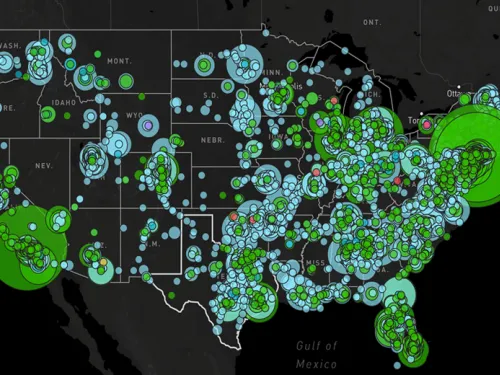
This report and interactive case archive document 65 cases across 41 U.S. locations, the most recent from August 2026, showing how Jewish, Israeli and openly Zionist artists face growing scrutiny, protest, disruption and cancellation across live music, comedy, dance, film and campus programming.
Key trends identified include:
Protest activity expanding from political advocacy into cultural exclusion, with campaigns increasingly aimed at preventing Jewish or Israeli artists from performing at all, as seen in repeated demonstrations against dozens of artists, like Matisyahu, the Batsheva Dance Company, and the Israel Philharmonic.
Security concerns functioning as a “security veto,” where the mere prospect of protest activity, rather than a concrete threat, is enough to cancel events, as occurred with musicians Mikey Pauker and Raviv Kaner.
Informal cultural boycotts and institutional distancing that unfold privately, including lost bookings and withdrawn invitations, such as Israeli singer Noga Erez's account of losing international bookings because she is Israeli.
Normalized audience disruption and harassment, including comedian Judy Gold being told “You're a Jew” during two shows in one weekend in April 2026, and singer-songwriter Regina Spektor being heckled mid-performance.
Social media escalation that compresses institutional decision-making and turns local disputes into national controversies within hours.
Institutional inconsistency, with venues and organizations responding unpredictably to controversies, leaving artists unable to anticipate how their appearances will be treated.
Alongside the three sector reports, the ADL Center on Extremism released an investigation on the activist networks organizing to infiltrate and pressure cultural institutions, including major museums, in order to exclude Jewish and Zionist artists and disrupt their operations. ADL has tracked a prominent and escalating trend of anti-Zionist protests targeting cultural institutions, including Jewish and Holocaust museums and Jewish entertainers. These trends have involved violence and physical intimidation, harassment, Holocaust trivialization, expressions of support for terror and antisemitic tropes, vandalism, extreme forms of disruption, organized blacklisting and coercive exclusion.
Companion Survey: What the U.S. Public Actually Thinks
A non-nationally representative survey of 951 U.S. adults, conducted by ADL in July 2026, further underscores that this exclusion is not being driven by audience demand: strong majorities of Americans said they would support Jewish and Israeli inclusion across galleries, performances and books, even as many respondents simultaneously said it was “understandable” that others would avoid such work, a disconnect that may explain how exclusion takes root and persists.
“This research shows a clear and consistent gap between perceived market risk, what Jewish and Israeli authors are being told, and actual audience demand,” said Shira Goodman, ADL’s Vice President of Public Affairs and Special Initiatives. “The interviews ADL carried out with literary professionals for this research, surfaced a recurring pattern of authors being told by agents and publishers to strip Jewish and/or Israeli themes and characters from their work over fears it won't sell or is too much of a risk. The survey findings suggest this risk aversion is a misperception, not a market reality, and something that urgently needs to be addressed by the industry.”
The Bottom Line
These findings reflect a combination of organized pressure campaigns, institutional risk-aversion, and structural blind spots in how museums, entertainment venues and publishers recognize and respond to antisemitism.
ADL is calling on museums, publishers, agents, venues and cultural institutions across the country to close these gaps: to name antisemitism explicitly in policies and DEI commitments, to recognize Jewish American Heritage Month alongside other heritage observances, to resist pressure campaigns rooted in identity-based exclusion, and to trust the data showing that American audiences want, and will support, Jewish and Israeli inclusion in the arts.
ADL is the leading anti-hate organization in the world. Founded in 1913 to protect the Jewish people, ADL works to stop the defamation of the Jewish people and secure justice and fair treatment to all. In the face of rising antisemitism and extremism, we protect, advocate, and educate, through a mix of programs and services using the latest innovations and technology, and seek to create a world without hate. More at www.adl.org.