When Fandom Meets Hate: Antisemitism in the True Crime Community (TCC)
Article
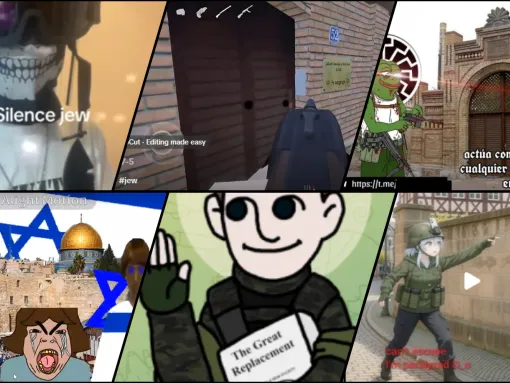
Antisemitism in the TCC shows up as casual slurs and inside jokes; admiration for antisemitic killers; extremist iconography like swastikas; and as part of how an attacker frames their violence.
What is Behavioral Threat Assessment and Management (BTAM)?
Tools and Strategies
BTAM helps schools, workplaces, clinicians, and law enforcement spot warning signs in persons who may be in crisis and intervene before violence occurs.
A loosely connected global network of online actors involved in illicit and harmful activities, like swatting, sadistic online exploitation (SOE), ransomware attacks, and distributing child sexual abuse material.
The Memetic Violence Field Guide: Terms, Symbols, and Phrases in Violent Online Subcultures
Tools and Strategies
A glossary that explains some of the popular terms, references, and images used to signal transgression and belonging in online communities that glorify mass violence and extremist killings.
How Meta's Content Moderation Practices Risk Turning Instagram into a Hub for Hate
Report
Meta CEO Mark Zuckerberg posted a video to Facebook in January 2025 announcing dramatic changes to the company’s content moderation policies. In the clip, the 40-year-old executive shared his commitment to restoring free expression and to making sure that “people can share their beliefs and experiences” on Meta platforms. In reality, our research has shown that these policy changes have resulted in a dramatic increase of antisemitism and extremism on Meta’s…
Antisemitic 9/11 Conspiracy Theories Endure and Evolve 25 Years Later
Article
When ADL published its first report on 9/11 conspiracy theories in 2003, it noted that the internet allowed an “unprecedented cross-fertilization of antisemitic ideas” and that they contributed to a “new form of global antisemitism.” The report also noted that these conspiracy theories were likely to endure and “form the basis of a new antisemitic canard that will linger for decades and be used to demonize Jews and Israel.” The report was prescient. The so…
The Safety Divide: Open-Source AI Models Fall Short on Guardrails for Antisemitic, Dangerous Content
Report
ADL study finds popular open-source LLMs can easily be manipulated by malicious actors to produce antisemitic, extremist, and dangerous content amid weak safety guardrails.
Two Years of Turmoil: The Strategic Evolution of Anti-Israel Activism on U.S. Campuses and 2025–2026 Challenges
Report
ADL examined the strategic evolution of anti-Israel activism on U.S. campuses and provides recommendations for universities to respond proactively to changing tactics.
How Islamist Terror Threats Have Evolved Since 9/11
Article
25 years after 9/11, the threat of Islamist extremism hasn't disappeared — it has evolved. Today's terror groups use social media to reach millions globally, across borders, and sometimes without ever communicating directly with them.
The form of targeted violence is driven by perpetrators primarily seeking attention, notoriety, or status within online communities, like the True Crime Community.
False Flag Narratives Emerge on Reddit After D.C., Boulder Attacks
Report
Research by the ADL Center for Tech & Society (CTS) found that the term ‘false flag’ ranked as the second most popular term on Reddit in a sample of conversations about the antisemitic Boulder attack and the fifth most popular following the D.C. Capitol Jewish Museum attack.
Since 2024, the ADL Center on Extremism has identified at least eight attackers who were active on this gore and violence forum prior to carrying out their acts of violence.
On social media and gaming platforms, hate and harassment thrive in closed online spaces, which lack the visibility and accountability of more open or public ones.
Artificial intelligence is rapidly reshaping how people consume and trust information—including what books they read. Amazon, the world’s largest bookseller, uses Large Language Models (LLMs) to generate short, snappy summaries of customer reviews. While this may be useful when applied to bedsheets or kitchen appliances, applying AI to book reviews—without human oversight—is proving to be deeply problematic. We found that AI-generated reviews are promoting books that…
Generating Hate: Anti-Jewish and Anti-Israel Bias in Leading Large Language Models
Report
Co-produced with Builders For Tomorrow Executive SummaryADL research shows that four leading LLMs, particularly Llama, display bias against Jews and Israel. LLM bias in other areas has already been highlighted; this report provides the most comprehensive evaluation to date of anti-Jewish and anti-Israel bias in major LLMs—GPT (OpenAI), Claude (Anthropic), Gemini (Google), and Llama (Meta). In 2025 and beyond, the importance of large language model (LLM)…
Editing for Hate: How Anti-Israel and Anti-Jewish Bias Undermines Wikipedia’s Neutrality
Report
Co-produced with Builders For Tomorrow Executive Summary ADL has identified extensive issues with antisemitic and anti-Israel bias on Wikipedia in multiple languages. These issues include 1) a coordinated campaign to manipulate Wikipedia content related to Israel, the Israeli-Palestinian conflict, and similar issues, in which a group of editors systematically evade Wikipedia’s rules to shift balanced narratives toward skewed ones, spotlighting criticism of Israel and downplaying…