




TikTok
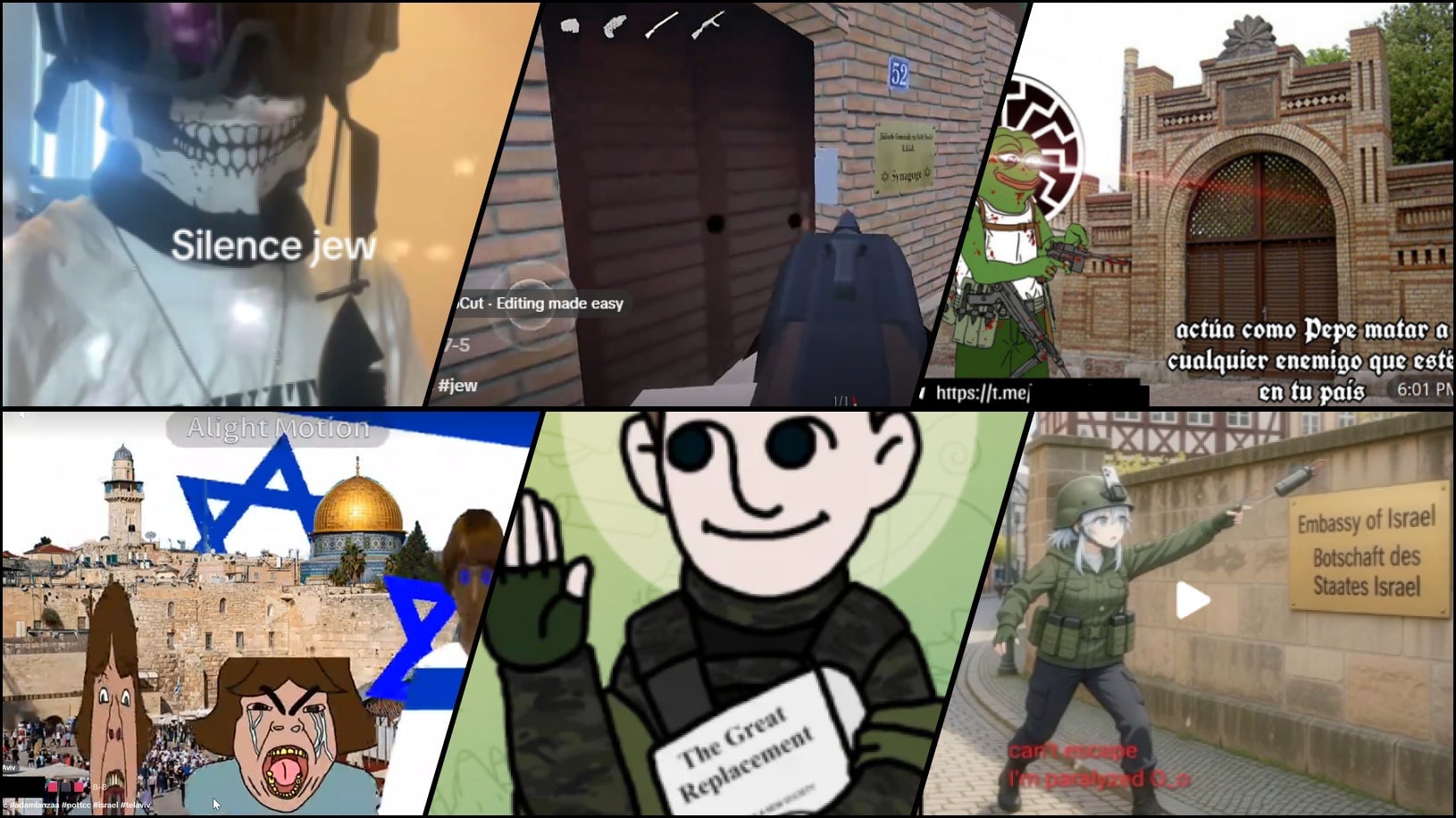
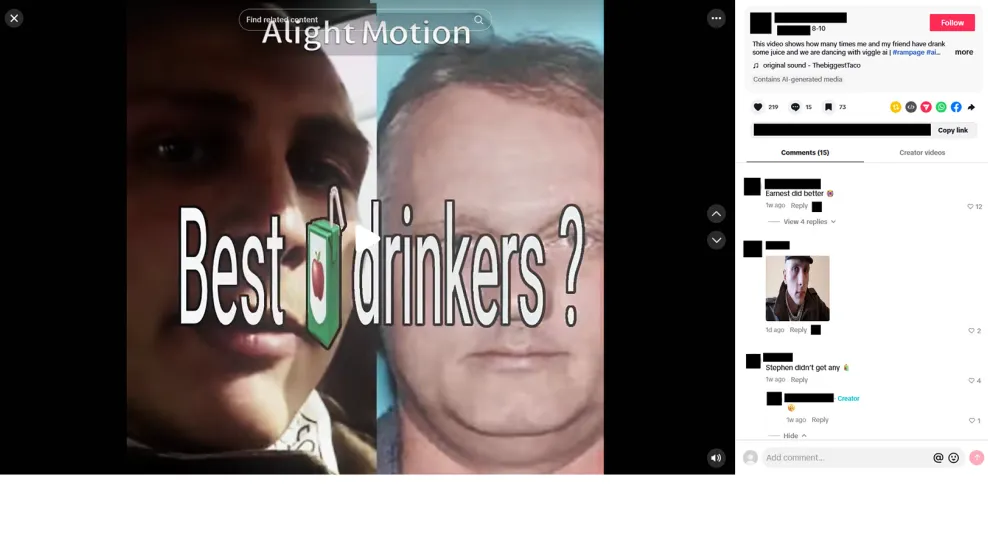
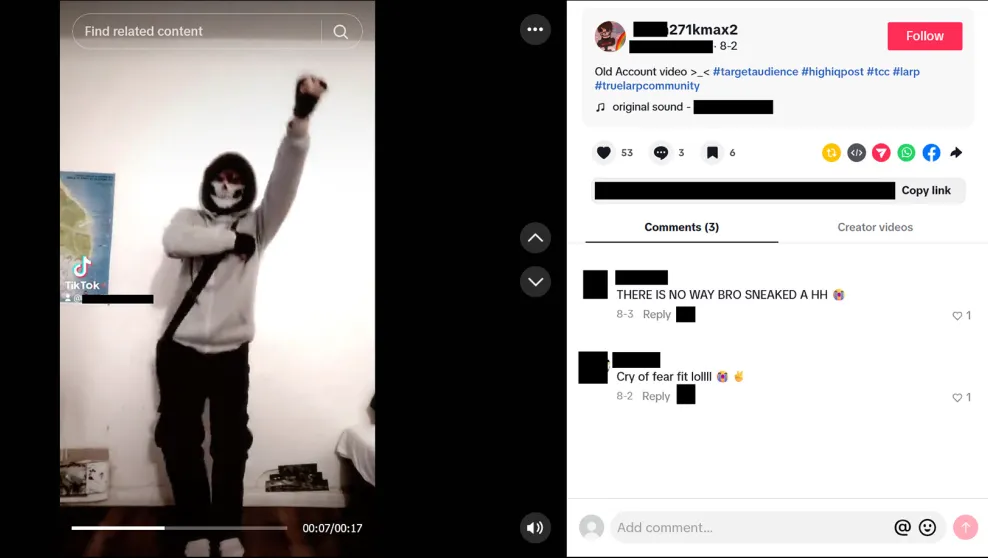
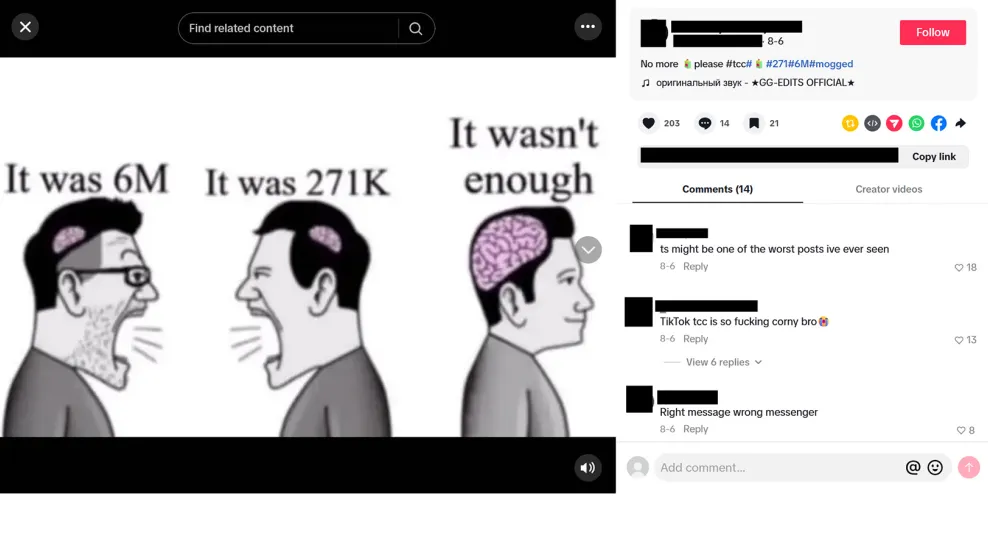
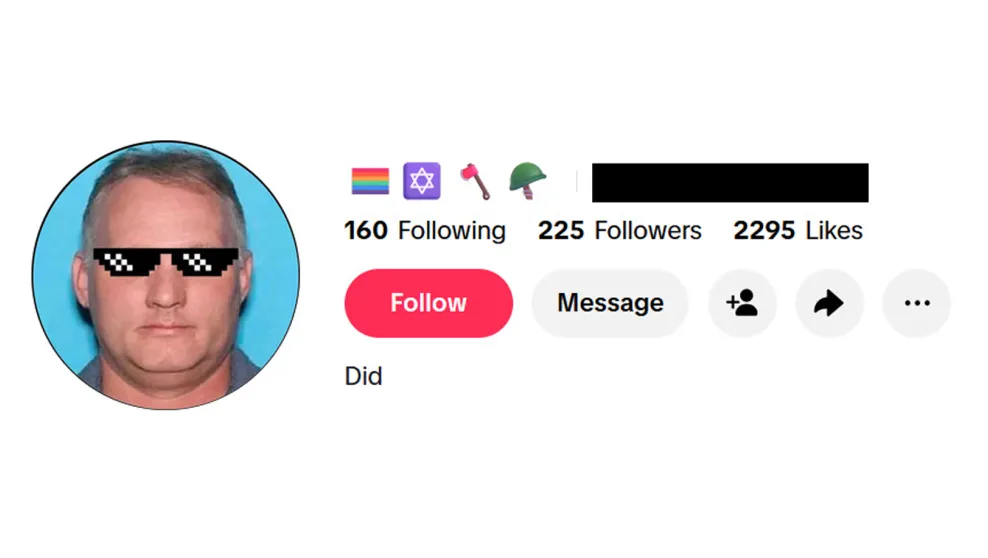
A collection of screenshots that circulate in the TCC from online posts, memes, and games, mostly from TikTok. Some of them recreate real attacks against Jewish targets.




Antisemitism runs through nearly every corner of the True Crime Community (TCC), a growing online subculture built around a fascination with mass killers and extreme violence. It shows up as casual slurs and inside jokes; admiration for antisemitic mass killers; extremist iconography like swastikas and sonnenrads; and, in some cases, as part of how an attacker frames their violence, even when Jewish people are not the target.
While some TCC members genuinely believe antisemitic ideas, others use them mainly to shock, gain notoriety, and signal belonging within the community. The effect is the same: the normalization of antisemitic rhetoric and imagery in these spaces. That normalization can be a factor that moves some individuals closer to violence.
Since 2024, the ADL Center on Extremism (COE) has identified at least 28 shootings, stabbings, and other forms of violence tied to the TCC, 19 of which were deadly. Some of these attacks are considered acts of memetic violence, a form of targeted violence committed largely for attention and status.
Antisemitism runs through many of these cases. At least eight perpetrators expressed antisemitic views online, and although none of the 28 attacks were directed specifically at Jewish institutions or people, several perpetrators used their manifestos and online posts to justify violence against Jews, blaming the Jewish community for a range of societal problems and personal grievances.
Understanding how antisemitism manifests within the TCC, and why, is essential to assessing the danger this community poses.
Members of the TCC share an intense fascination with violence and killers. Most are young, sometimes vulnerable, individuals looking for a sense of community, belonging, and status, which they earn by demonstrating detailed knowledge of admired killers, often through repeating and mimicking their words, symbols, and imagery.
Because some of the killers idolized were motivated by extremist ideologies, including white supremacy and antisemitism, that same drive to imitate and belong can often mean that members share and repeat antisemitic language and symbols as well, even when they do not personally hold those beliefs. Even this casual or performative exposure can serve as a stepping stone to white supremacy, accelerationism, inceldom, and satanic neo-Nazism.
Antisemitism shows up across TCC spaces in several recurring ways: through slurs and inside jokes, glorification of antisemitic killers, language and symbols borrowed from established hate movements, and efforts to dodge content moderation.
Antisemitic slurs and references are embedded in usernames, comments, memes, and weapon inscriptions in TCC spaces. The 2025 Antioch High School shooter called Jews "soft targets" and wrote that "k*kes are poisoning our culture" in his manifesto, which also included propaganda from the antisemitic Goyim Defense League alongside anti-Black racism and references to various other attackers venerated within the TCC.
The perpetrator of a December 2025 attack at a school outside Moscow, Russia, similarly wrote neo-Nazi slogans and symbols on his helmet and belongings, including “Beat the Jews – Save Russia” and “SYGAOWN” (an abbreviation of “Stop your genocide against our white nations”). He reportedly sent his classmates a manifesto that praised the 1999 Columbine High School shooters and the 2019 Halle synagogue attacker, promoted the “Great Replacement” theory, and expressed hatred for Jews and other minorities.
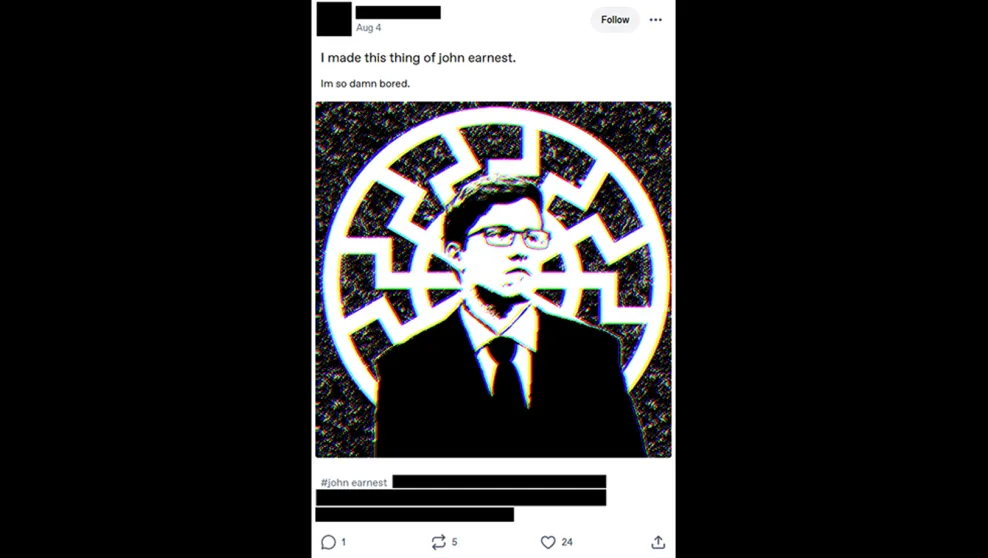
Killers who specifically targeted the Jewish community are also glorified and celebrated by some TCC adherents. These include the white supremacist perpetrator who killed 11 congregants at the Tree of Life synagogue in Pittsburgh in 2018, the deadliest antisemitic attack on U.S. soil; the attacker at a Chabad synagogue in Poway, California, in 2019; and the 2019 Halle, Germany synagogue shooter. The 2022 Buffalo supermarket shooter, who supported the antisemitic “Great Replacement” conspiracy theory and advocated for war between Jews and non-Jews, is also widely admired.
Admiration of these killers appears in fan-edit videos, reposts of their livestreamed attacks, and online games recreating past attacks. Within days of the 2025 Bondi Beach shooting in Australia, where two Islamic State-inspired attackers killed 15 Jewish people and wounded 40 others, TCC members created and shared multiple online games recreating the shooting.
COE analysts have found similar recreations of the 2018 Tree of Life and 2019 Halle synagogue shootings, in addition to mods and skins (user-created modifications for in-game items) that add sonnenrads, swastikas, and other antisemitic symbols to weapons and characters in-game.
TCC members also use AI to generate videos of these attackers dancing in front of attack sites, and recreate their outfits, poses, and social media posts.
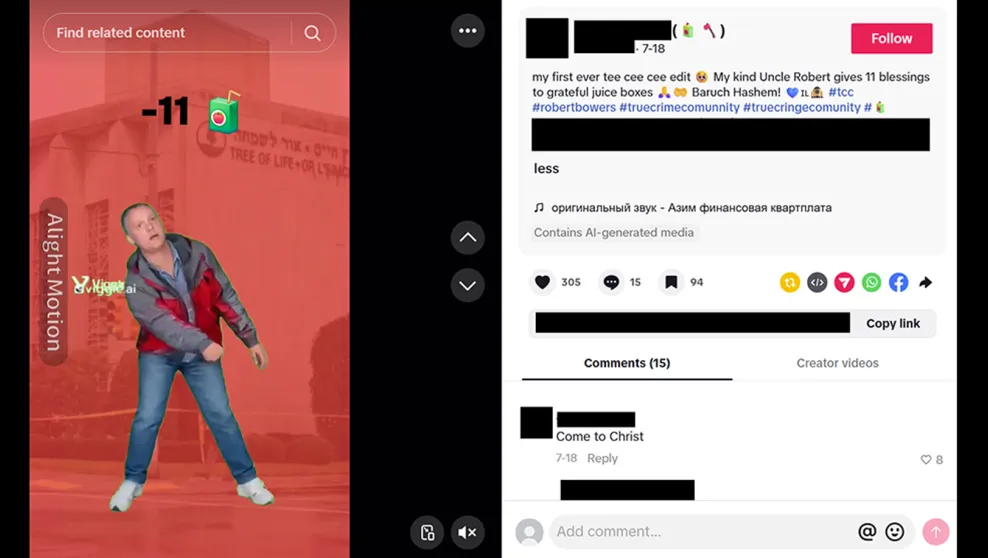

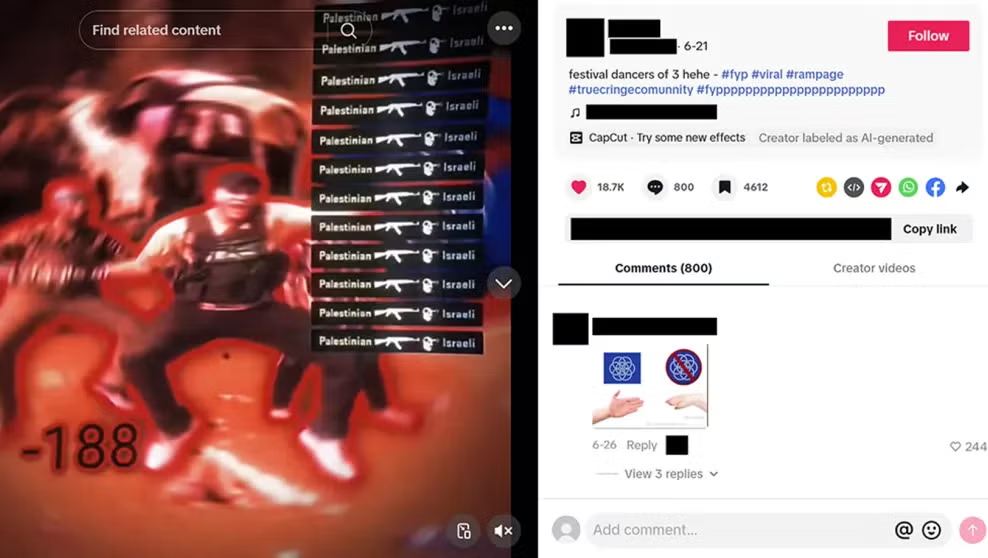

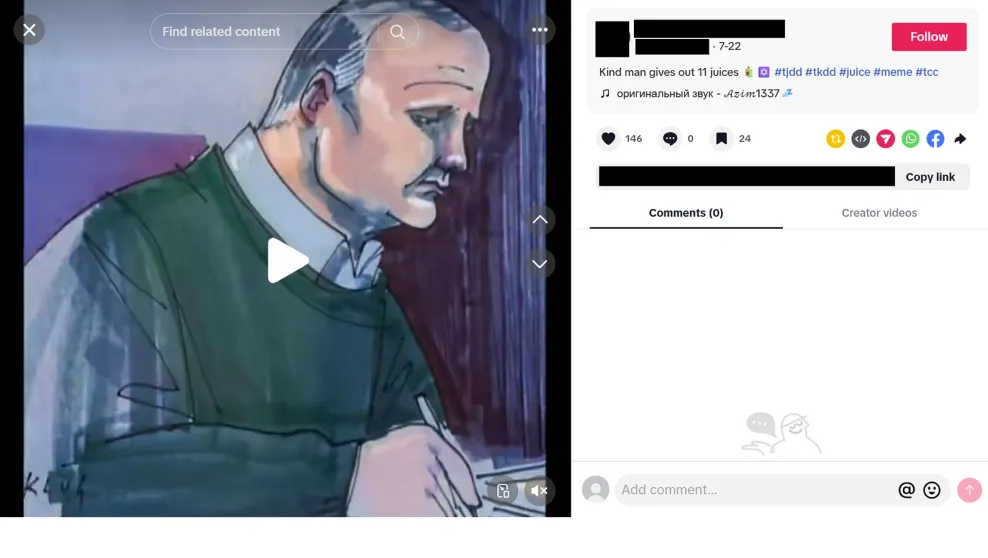
TCC members sometimes joke that Jews are behind law enforcement and content moderation efforts to curb their activity, blaming Jews, the ADL, Israel, or Jewish organizations more broadly whenever their accounts, channels, or posts are removed for violent content.
As a result, TCC members often try to evade content moderation by disguising antisemitic references through coded language, filters, or superimposed images. They may refer to Jews as "juice" or use a juice box emoji 🧃, use the phrase "baking cookies" to allude to Holocaust denial, or repeat the false claim that only 271,000 Jews died in the Holocaust.
Members of the TCC may also casually incorporate Jewish symbols like the Star of David into videos and comments praising mass violence, even when the attack being discussed did not target Jews and was not committed by an antisemitic assailant.
TCC members frequently borrow antisemitic language and symbols from neo-Nazi and accelerationist spaces. Members may wear sonnenrad patches, post selfies performing the Hitler salute, or incorporate numerical references like “1488” into their online aliases. Praise for Hitler and clips of Nazi propaganda also commonly appear in TCC channels.
This exchange runs in both directions. Just as the TCC borrows imagery and language from extremist movements, TCC content increasingly flows back into those same spaces: online games recreating past attacks, fan edit-style videos, and TCC memes are shared, remixed, and celebrated in neo-Nazi and other extremist spaces, reinforcing the same antisemitic narratives that inspired them in the first place.
TCC spaces reinforce antisemitism through internal reward systems. Users who post "tame" content are often mocked, while those who demonstrate detailed knowledge of past attacks and obscure references, including antisemitic ones, are praised. Many members initially adopt this language for shock value, but repeated exposure gradually deepens their familiarity with, and desensitizes them to, hateful ideologies that center antisemitism.
Antisemitic conspiracy theories, including the notion that Jews secretly control government, media, and finance and are the root of various societal ills, serve three primary purposes in the TCC.
First, they act as social currency, proving someone is a true insider who understands and knows the culture, since referencing past attackers earns respect and status. Second, they offer a simple explanation for complicated events and personal setbacks by pinning the blame on an imagined enemy instead of anything more complex. Third, by blaming Jews for that grievance, these narratives turn feelings of alienation and powerlessness into a sense of purpose, casting Jews as both the cause of someone’s hardship and something they can fight back against.
Antisemitic conspiracy theories turn Jews into a convenient scapegoat for both world events and personal failures. This scapegoating is reinforced within TCC fora, where the premise that Jews control government and society is often taken as self-evident, due to frequent exposure to content from adjacent extremist communities and attacker manifestos. Referencing “Jewish control” provides status in an ecosystem where standing out is earned through transgressive content.
TCC adherents are united more by a fascination with violence than by a shared set of beliefs. A TCC member may not personally agree with a killer’s beliefs but will still adopt the language or symbols they used to glorify them.
This dynamic plays out in the subculture's use of Nazi imagery, slurs, and memes to signal fluency in TCC “lingo” and detailed knowledge of admired attackers. Phrases and symbols drawn from past mass attackers’ manifestos, weapon inscriptions, and social media posts become shared markers of belonging, appearing even in cases where the community or individuals attacked were not Jewish.
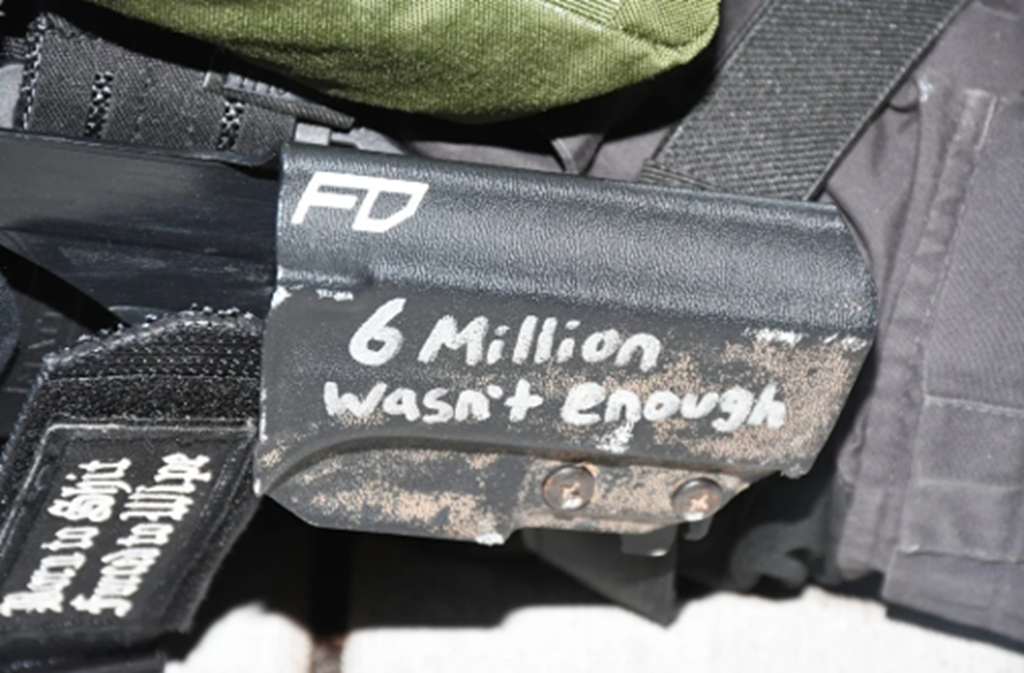
The 2025 Annunciation Catholic School shooter, for example, covered their weapons with antisemitic and anti-Israel phrases, including “6 Million Wasn’t Enough” (referencing the six million Jews murdered in the Holocaust), “Jew Gas” (referencing the Nazis’ use of poisonous gas to murder Jews), “Burn Israel,” “Destroy HIAS” (referring to the Hebrew Immigrant Aid Society), and “Israel must fall,” alongside hateful language targeting Christians, Black people, the LGBTQ+ community, Muslims, and Latino communities.
(Screenshot)
The 2025 Annunciation Catholic School shooter’s holster featured the handwritten phrase “6 Million Wasn’t Enough,” an antisemitic slogan referencing the Holocaust.
The TCC, like other online spaces saturated with extreme and violent content, can reinforce and shape the beliefs and actions of individuals at risk of committing violence.
Repeated exposure to antisemitic symbols, praise for antisemitic mass killers, and denigration of Jews and other minority communities can desensitize people to hateful beliefs and violence, and in some cases, contribute to a path toward violent action.
This content does not stay confined to niche corners of the internet; it also circulates on mainstream social media, where it can reach younger users who may encounter extremist and antisemitic material for the first time through coded references that carry no obvious signs of hate to an uninformed viewer. Recognizing how antisemitism functions within the TCC helps parents, educators, law enforcement, and policymakers identify concerning behavior earlier.
Our resource hub, Understanding Targeted and Mass Violence Involving Youth, offers further guidance on recognizing the signs and disrupting the pathways that draw young people into violent extremism.