







Understanding Targeted and Mass Violence Involving Youth
This page contains disturbing descriptions and imagery that may be upsetting to some readers.
Viewer discretion is advised.
The ADL Center on Extremism (COE) has tracked a disturbing rise in online communities that glorify mass shooters, extremist killers, and other perpetrators of mass violence. These interconnected spaces include gore forums like WatchPeopleDie, where users share graphic footage of killings; the Com network and 764, which groom and exploit young people through sextortion and self-harm challenges; and the True Crime Community (TCC), which is centered on a shared fascination with violence and mass killers. Participants often seek belonging before ideology enters the picture, but they can quickly become desensitized to extreme violence and exposed to neo-Nazi rhetoric, antisemitism, racism, and misogyny. Antisemitism, in particular, runs as a connective thread throughout these digital spaces.
Since 2024, COE has documented dozens of attacks tied to these communities, including two school shootings carried out by teens with strikingly similar online pathways to violence. Many of these attacks fall under memetic violence, a form of targeted violence committed largely for attention and status within these communities. This behavior is referred to as nihilistic violent extremism (NVE) in law enforcement circles. Perpetrators often hit a symbolic target — a school, place of worship, or site tied to an identity group — with the intent to maximize casualties. They may leave behind manifestos, footage, and other material meant to be shared and celebrated.
Preventing such attacks starts with understanding the threats. This page brings together ADL research, tools, and resources on how these communities operate, the symbols they use, warning signs, and proven models for disrupting the path to violence. Parents, educators, law enforcement, and community members all have a role to play in keeping young people safe.
Tabs
The ADL Center on Extremism works to prevent violence before it happens. Our team of specialized analysts monitors online spaces where extremists gather, tracking threats against the Jewish community and other vulnerable groups.
Using advanced technology and deep expertise in extremist movements, we monitor content posted publicly on social media and online platforms to review threats and plans for potential acts of violence. When we detect a potential threat, we act fast, sharing information with law enforcement and community partners who can intervene before anyone gets hurt.
Our approach works. Since 2024, COE analysts have contributed to at least 16 arrests and helped to prevent potential acts of violence against communities around the globe. Behind the scenes, this work has supported criminal investigations and protective actions worldwide.
ADL teams also:
- Equip decision-makers with data and information. We brief law enforcement, tech and social media companies, and policymakers on emerging extremist trends, and train Jewish security partners on how to spot and assess potential threats.
- Advocate for stronger protections. We push tech platforms to enforce their policies against extremism and hate, fight for funding that helps Jewish institutions secure their spaces, and champion legislation that combats extremist activity.
- Pursue justice in the courts. Our legal team holds extremists accountable through litigation, working to ensure they face real consequences for harassment and violence.
- Support victims directly. From helping families address discrimination and bullying at school to following up with police on behalf of victims, we stand with individuals facing antisemitism, extremism, and hate every step of the way.
The ADL Center on Extremism works to prevent violence before it happens. Our team of specialized analysts monitors online spaces where extremists gather, tracking threats against the Jewish community and other vulnerable groups.
Using advanced technology and deep expertise in extremist movements, we monitor content posted publicly on social media and online platforms to review threats and plans for potential acts of violence. When we detect a potential threat, we act fast, sharing information with law enforcement and community partners who can intervene before anyone gets hurt.
Our approach works. Since 2024, COE analysts have contributed to at least 16 arrests and helped to prevent potential acts of violence against communities around the globe. Behind the scenes, this work has supported criminal investigations and protective actions worldwide.
ADL teams also:
- Equip decision-makers with data and information. We brief law enforcement, tech and social media companies, and policymakers on emerging extremist trends, and train Jewish security partners on how to spot and assess potential threats.
- Advocate for stronger protections. We push tech platforms to enforce their policies against extremism and hate, fight for funding that helps Jewish institutions secure their spaces, and champion legislation that combats extremist activity.
- Pursue justice in the courts. Our legal team holds extremists accountable through litigation, working to ensure they face real consequences for harassment and violence.
- Support victims directly. From helping families address discrimination and bullying at school to following up with police on behalf of victims, we stand with individuals facing antisemitism, extremism, and hate every step of the way.
The Broader Threat Landscape

What is Memetic Violence?
Memetic violence describes acts of targeted violence perpetrated by individuals who are primarily seeking attention, notoriety, or status within online communities like the TCC. These acts are designed as content, with footage and manifestos meant to be shared, celebrated, and imitated by future attackers.
The Memetic Violence Field Guide: Terms, Symbols, and Phrases in Violent Online Subcultures
COE's Memetic Violence Field Guide explains some of the popular terms, references, and images used to signal transgression and belonging in online communities that glorify mass violence and extremist killings. These include the True Crime Community (TCC), the 764/Com networks, gore forums, and related digital networks.
This guide contains graphic descriptions and imagery related to extremist violence, coercion, and self-harm. Viewer discretion is advised.
True Crime Community Attacks and Plots
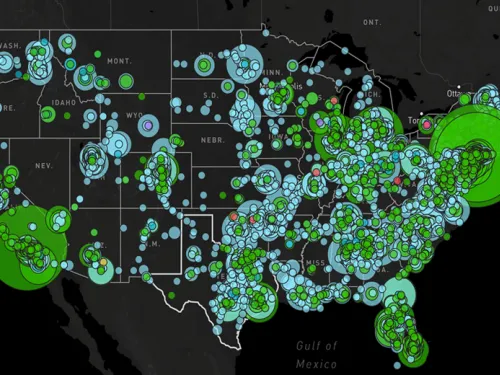
The True Crime Community has, in extreme cases, inspired some followers to commit violence, emulating venerated killers. Since 2024, COE has identified at least 51 TCC-linked attacks, plots, and other activities worldwide, catalogued in COE's TCC Attacks and Plots Map.
Recognizing and Responding to Targeted Violence

Targeted Violence and the Pathway to Violence
Targeted violence is planned, not random. Learn the stages that lead from thought to action, and how to spot them.

Behavioral Threat Assessment and Management (BTAM)
BTAM helps schools, workplaces, clinicians, and law enforcement spot warning signs and intervene before violence occurs.

Risk Factors and Warning Signs
Most acts of targeted violence don't happen without warning. Learn what experts look for, and how catching signs early can save lives.

Becoming an Upstander
The difference between a foiled plot and a tragedy can be just one person. Learn why speaking up matters, and how to do it.

Target Hardening: Making Sites Safer
Every entrance, hallway, and exit matters. Learn how to make sites harder to target for violence.
Swatting and Doxing: What You Need to Know
Swatting and doxing are on the rise. Learn how to recognize these attacks and respond if they happen to you.
Resources by Audience
Tabs
A Shared Responsibility: Recommendations for Government and Tech Platforms
This policy brief calls on government leaders, tech and social media platforms, and infrastructure providers to close the gaps that let gore forums, exploitation networks, and violence-focused subcultures desensitize participants to graphic violence and expose them to extremist rhetoric and ideologies. It outlines concrete steps — from cross-platform signal-sharing and livestream safeguards to sustained funding for prevention programs — aimed at disrupting these networks before this exposure escalates into physical violence.
Federal and State Policy Recommendations
1. Invest in community-based violence prevention.
There is an urgent need for targeted interventions that can steer individuals away from pathways to violence. Yet programs that offer such “off-ramps” remain dangerously underfunded and unevenly distributed across the country.
Federal, state, and local governments all have a role to play in preventing violence before it starts, especially among youth drawn into violent ideologies. Congress should direct the Department of Homeland Security to fund grant programs that put resources directly into the hands of the people best positioned to intervene: community organizations, schools, faith leaders, and local partners working to identify and help at-risk individuals.
Intervention work, including threat assessment, deradicalization, counter-messaging, and exit programs, requires urgent funding to address threats at their source. Such programs are not only cost-effective, but they are also increasingly important in an environment where young people, including those under 18, perpetrate acts of targeted and mass violence driven by grievance, hate, and, in some cases, a pursuit of notoriety online.
Few existing law enforcement options or legal recourses address this growing phenomenon. Community-based prevention programs can foster resilience, inoculate against hate, and de-escalate violent and extremist pathways before they result in harm.
To be most effective, these prevention efforts must be prioritized. Federal, state, and local governments should invest in these programs, and all grants and actions should be paired with increased transparency and improved program evaluation.
2. Strengthen and fund the Nonprofit Security Grant Program (NSGP) at $1 billion.
The need to strengthen NSGP has never been more urgent. This bipartisan, lifesaving program provides synagogues, schools, and other at-risk institutions with the resources they need to prevent attacks before they occur, including security personnel, surveillance systems, reinforced infrastructure, and training. Its impact is well documented, helping protect communities in moments of real threat, including in Colleyville, Texas, and Memphis, Tennessee.
Recent attacks in Jackson, Mississippi, and West Bloomfield, Michigan, underscore that these threats are ongoing and nationwide. Yet demand continues to far outpace available funding, with nearly $1 billion requested in recent cycles and thousands of applicants left without support. ADL urges Congress to fund NSGP at $1 billion to ensure vulnerable communities have the protection they need.
On the state level, too, ADL urges every state to establish and fund a robust NSGP to help protect houses of worship, schools, community centers, and other nonprofits at risk of hate-motivated violence.
State programs are essential to complement federal funding and address gaps, particularly as demand for security resources continues to grow. By providing support for personnel, physical security enhancements, technology upgrades, and training, these programs ensure that vulnerable institutions have the tools they need to protect their communities. States should view these programs as a core component of their public safety strategy.
3. Prevent radicalization of youth in online spaces.
Several states have laws in place that require age verification on websites that have content that is "harmful to minors." States should look at whether these laws could apply to this type of extreme violent content (which can include rape and sexual abuse). Enforcement authorities in jurisdictions with such laws should notify the operators of such sites that they are subject to these laws and must implement compliant age-verification systems.
In addition, states should prioritize programming in K-12 schools to foster digital literacy and critical thinking skills, empowering individuals to recognize and resist online recruitment efforts, extremist ideologies, and misinformation. States should also take steps to ensure that sites that feature and glorify violent content, including suicide, torture, murder, and terrorist attacks, are blocked on school computers.
Policy Recommendations for Tech and Social Media Platforms
1. Proactively engage in cross-platform and multi-stakeholder collaboration.
Online networks tied to youth violence span multiple platforms and cut across historically siloed policy areas including violent extremism, child safety, self-harm, and cybercrime. While some platforms already have adequate policies in place for these harms, no single platform sees the full picture. Companies should empower internal safety teams to coordinate with each other and other key stakeholders, and share signals externally through established channels by:
- Contributing to the Tech Coalition’s Lantern program with content-based signals (keywords, URLs, etc.) and incident-based signals tied to child safety violations.
- Participating in the Global Internet Forum to Counter Terrorism’s hash-sharing database, which lets member companies flag and match digital fingerprints of known terrorist and violent extremist content, and its Incident Response Framework, which coordinates rapid, cross-platform action during real-world attacks or emerging crises.
- Partnering with civil society organizations and subject matter experts for threat briefings, lexicon updates, red-teaming, and moderator training, backed by clear escalation pathways for partners to share signals and context.
- Filing actionable reports to the National Center for Missing and Exploited Children (NCMEC), per its guidance on identifiers useful for online enticement and trafficking cases, and to the FBI’s National Threat Operations Section (NTOS), or equivalent authorities abroad, regarding concerning behaviors such as threats to commit mass shootings.
2. Ensure multiple layers of protection around livestreaming.
Signal-sharing catches known threats — but memetic violence perpetrators have repeatedly exploited livestreaming to broadcast attacks in real time. Platforms need layered safeguards specific to this format.
- Require account verification and follower or account-history benchmarks before granting unrestricted broadcast capability.
- Cap concurrent viewership for new streamers, expanding limits only with a demonstrated compliance record.
- Apply short broadcast delays for unverified accounts to create a window for intervention.
- Strengthen default guardrails and access for accounts belonging to minors.
- Fund detection continuously rather than surging capacity only after an attack.
- Use automated detection tools to identify concerning behavior and key visual signals, such as weapons or blood, during livestreams.
3. Invest in intervention tooling beyond bans.
Platforms should invest in testing interventions and expanding safety tooling that discourages harmful behavior rather than simply removing users.
- Build “soft intervention” prompts that flag concerning behavior before it escalates, modeled on features that would prompt users to edit or delete a potentially offensive comment or caption before posting.
- Extend the same “nudge” model already used for suicide and self-harm searches — where platforms surface crisis resources directly in search results — to redirect users showing interest in mass violence or True Crime Community content.
- Test these interventions with external researchers before wide rollout, since messaging that isn’t carefully designed risks pushing at-risk users deeper into extremism or pathways to violence rather than away from them.
4. Disrupt outlinking to sites that facilitate bad actor network activities and content.
Platforms can’t stop users from visiting other bad actor network websites. But they can control whether and how hyperlinks to such sites show up on their own sites — i.e., whether posts by users with such hyperlinks stay up, whether those posts appear in search or recommendations, whether the hyperlink itself generates a clickable preview, etc.
Such sites are active social spaces, not passive archives. WatchPeopleDie has been tied to at least eight mass attacks since 2024, has more than 5.5 million registered users as of August 2026, and hosts dedicated boards for killings and attacks by the Islamic State terrorist group and specific drug cartels. Its second most-viewed post of all time is a compilation of dozens of extremist mass killings including the Hamas-led October 7 terrorist massacre in Israel; the May 2022 Buffalo supermarket attack; the October 2019 Halle, Germany synagogue attack; the August 2019 El Paso shooting; the April 2019 Poway Chabad shooting; and the March 2019 Christchurch, New Zealand, massacre. Its TCC group has more than 2,300 members.
Platforms should develop and publish clear criteria for when a site will be blocked, suppressed/removed from recommendations and search, or paired with crisis resources. Sites that primarily host death, gore, attack footage and livestreams, or manifestos, or that help violent extremists organize or network, should be off limits.
Platforms should also remain vigilant for workarounds such as updated or alternate URLs. WatchPeopleDie, for example, is one of several forums in the Marsey Network, a set of forums that share owners, corporate structure, software, revenue streams, and user bases under WPD Media LLC. Responsive action should extend to the network as a whole.
5. Enhance enforcement of user-level bans based on platform terms.
- At the user level, apply stronger friction for repeat offenders — e.g., IP blocking and device fingerprinting — mechanisms some platforms likely already use against spam accounts.
- Track on-platform markers of ban evasion, such as a new account listing a previous handle or a previous account's follower count in its bio.
- Partner with outside experts to monitor off-platform regrouping signals, such as new hashtags that networks adopt to reconvene.
This recommendation builds on analysis from the Institute for Strategic Dialogue’s 2026 GNET report on nihilistic violent extremism.
6. Build law enforcement escalation into internal threat assessment.
- Empower staff who assess threats to escalate them to law enforcement through formal channels built proactively, not ad hoc reporting after the fact.
- Adapt established Behavioral Threat Assessment and Management (BTAM) frameworks internally, such as ATAP’s RAGE-V, the FBI’s Making Prevention a Reality, and TRAP-18.
7. Keep perpetrator names and materials out of recommendation systems.
There may be legitimate reasons to search for a perpetrator’s name, e.g., for news coverage or research, so platforms shouldn’t simply block these names as search terms. But they should ensure their own systems aren’t the ones amplifying them:
- Scrutinize how perpetrator names surface in search autocomplete, trending topics, related content, and engagement-based recommendations.
- Stay vigilant beyond high-profile cases: proactively monitor for emerging content tied to new incidents and lesser-known perpetrators who develop followings of their own.
8. Build safeguards into AI chatbots and LLM products.
Platforms hosting AI chatbots and other LLM tools, either as the core product or as part of a suite of products, should ensure that they have sufficient guardrails against user behaviors and content signals related to violent networks.
- Test safety across extended, multi-session conversations, not just isolated exchanges.
- Red-team specifically against coercive tactics found in playbooks, doxxing and swatting facilitation, sextortion, self-harm encouragement, perpetrator roleplay, and manifesto generation — roleplaying as past attackers (“LARPing,” in the communities’ own terms) is already common, and AI-generated tribute content is already circulating.
- Review user-created bots: screen personas, system prompts, and names before distribution, and prohibit bots built to portray real perpetrators.
9. Ensure enforcement of terms by infrastructure providers.
Infrastructure providers are the technical backbone that lets high-threat sites stay online long-term as hubs for coordination and content-sharing.
These providers must:
- Formalize and enforce robust policies against sites that promote terrorism and violent extremism.
- Build efficient reporting channels for civil society experts and others to flag violations, ideally letting reporters specify the type of violation to speed up review.
WatchPeopleDie: Help Limit Access by Children
This disturbing website exposes anyone, including children, to real footage of mass shootings, torture, and suicides, along with extremist rhetoric. No child should be able to access this. Demand your governor and state attorney general act now.
Additional Resources
These resources provide evidence-based guidance on violence prevention, threat assessment, and emergency preparedness for schools, caregivers, and law enforcement.

Who to Contact

988 Suicide & Crisis Lifeline
Free, confidential support for anyone in emotional distress or crisis. Call, text, or chat 988 anytime, 24/7.

FBI Electronic Tip Form
Report swatting, online threats, crimes against children, and other criminal activity directly to the FBI.

NCMEC’s CyberTipline
Report child exploitation to NCMEC 24/7. Reports may be passed on to law enforcement for investigation.
Take It Down
A free service operated by NCMEC that helps individuals remove explicit images or videos of themselves from the internet.
Sandy Hook Promise's Tipline
Anonymously report concerns about someone who may hurt themselves or others, 24/7. Trained counselors may alert schools and law enforcement.

ADL Incident Reporting Form
Report antisemitism, extremism, hate, or discrimination to ADL, and we'll follow up with support or resources where we can.