DOWNLOAD THE PDF REPORTAntisemitism has been a problem on college and university campuses for decades. But while the climate for Jewish students had been improving for many years, we are seeing an alarming new uptick in the number of reported antisemitic incidents across the country. Swastikas, Nazi symbols and other antisemitic graffiti have been reported on numerous campuses, and antisemitic tropes hurled at Jewish students have made headlines. Most notably, white supremacists…
Joint Statement: ADL, Jewish Federations of North America, Secure Community Network, CSS, and CSI-NY Urge Precautions Following U.S. and Israeli Strikes on Iran
Press Release
UNITED STATES — Following strikes by the United States and Israel on the Islamic Republic of Iran, Jewish Federations of North America, Secure Community Network (SCN), ADL (Anti-Defamation League), Community Security Service (CSS), and Community Security Initiative (CSI) of New York, recommend that Jewish communities across North America remain vigilant and maintain heightened security measures. Tensions involving Iran contribute to an already elevated threat environment…
ADL Statement on the FBI Director's 10/1 Announcement
Press Release
New York, NY, October 1, 2025 … ADL (the Anti-Defamation League) issued the following statement in response to today’s announcement from FBI Director Kash Patel regarding the FBI’s relationship with ADL. “As we prepare to observe the holiest day of the year on the Jewish calendar, we have seen the statement from FBI Director Patel regarding the FBI’s relationship with ADL. “ADL has deep respect for the Federal Bureau of Investigation and law enforcement…
ADL and CSI-NY Launch First-Ever National Threat Detection and Monitoring Initiative: The Joint Threat Intelligence Partnership (JTIP)
Press Release
New York, NY, September 19, 2025 …The Anti-Defamation League (ADL) Center on Extremism and the Community Security Initiative of New York (CSI-NY) today announced the launch of the Joint Threat Intelligence Partnership (JTIP), a groundbreaking national initiative to detect, investigate, and disrupt threats targeting Jewish communities across the United States. The JTIP represents the first-ever coordinated nationwide system of threat detection and intelligence-sharing for…
In the aftermath of the terrible attack in New Orleans, the Jewish Federations of North America, the Secure Community Network, ADL, Community Security Initiative-NY, and the Community Security Service have all been in close coordination. As of this time, we are not aware of any specific threat to the Jewish community from this particular incident. All Jewish Federation community security programs are on alert, especially with regard to any large public gatherings that may be occurring…
ADL and Jewish Grad Organization Partner to Fight Antisemitism
Press Release
New York, NY, December 18, 2024 … JGO: The Jewish Graduate Organization, the leading organization on college and university campuses in America servicing Jewish graduate students, and ADL (the Anti-Defamation League) today announced a new partnership to combat antisemitism and support Jewish graduate students on campus. Through the partnership, ADL will provide JGO with resources, specialized training for staff and interns, educational opportunities, enhanced antisemitism reporting…
ADL Appoints FBI Veteran as Vice President, Global Safety & Security
Press Release
New York, NY, October 1, 2024 …ADL (the Anti-Defamation League) today appointed veteran federal law enforcement executive Steve Gonzalez as its new vice president of global safety and security. A longtime leader at the Federal Bureau of Investigation, Gonzalez most recently served as assistant special agent in charge of the FBI’s New York Criminal Division. “We are pleased to welcome Steve Gonzalez into our top security leadership position at ADL,” said Jonathan…
Investigating Digital Abuse: Mitigating Harm Online and On the Ground: A Toolkit for Law Enforcement
Action Guide
ADL’s toolkit on digital abuse and online hate equips law enforcement with tools to address hate or harassment that starts online but does not always stay there
Remarks by Jonathan Greenblatt to the ADL Virtual National Leadership Summit
News
May 01, 2022
Thank you for that kind introduction. I am so glad to welcome you – leaders from coast to coast committed to the fight against antisemitism and hate.
I don’t need to tell you how important and pressing this work is. All of you know this from the work you do in your communities. You know when a synagogue or cemetery is desecrated. You know the families who have to comfort their children after a slur is hurled their way – online or in real life. You all…
Jonathan Greenblatt Remarks to the Eradicate Hate Global Summit
News
October 18, 2021 Remarks by Jonathan A. Greenblatt
ADL CEO and National Director
to the Eradicate Hate Global Forum, Oct. 18, 2021
David L. Lawrence Convention Center, Pittsburgh, PA
Thank you, Jeff, for that nice introduction. I appreciate it.
I’m humbled to be back in Pittsburgh, this amazing community whose people are a beacon of neighborliness and civility, of kindness and candor. What an honor and privilege it is to be back here and to speak to all of you…
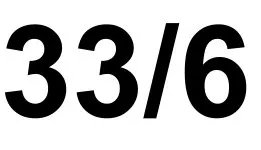
The number 33 is used by Ku Klux Klan adherents to signify the Ku Klux Klan. Since the 11th letter of the alphabet is K, three Ks signify "KKK" or the Ku Klux Klan. When using this reference, Klan members will frequently add the number 6 at the end, as in 33/6, because they think the Klan is currently in its sixth historical "era." Less commonly, some holdouts may still use the numeric code 33/5. Additional Images:
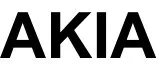
AKIA is Ku Klux Klan shorthand for "A Klansman I Am." It is related to another Klan acronym, AYAK ("Are You A Klansman?"). These are among the many acronyms developed by the Second Ku Klux Klan that emerged in 1915. Although the Second Ku Klux Klan did not survive, much of its terminology and many of its rituals did, and later Klan groups freely used them. Additional Images:
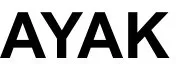
AYAK is Ku Klux Klan shorthand for "Are You A Klansman?" It is related to another Klan acronym, AKIA ("A Klansman I Am"). These are among the many acronyms developed by the Second Ku Klux Klan that emerged in 1915. Although the Second Ku Klux Klan did not survive, much of its terminology and many of its rituals did, and later Klan groups have freely used them. Additional Images:
ALTERNATE NAMES: Ku Klux Klan, MIOAKGroup Status: Active (in that there are many active Ku Klux Klan groups)
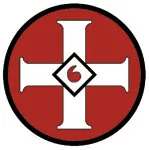
For the past century, the primary symbol related to Ku Klux Klan groups (other than Klan robes themselves) is what Klan members may call the MIOAK (an acronym for "Mystic Insignia of a Klansman"). It is more commonly referred to as the "Blood Drop" Cross. It appears as a square white cross in black outline against a circular red background. In the middle of the cross is what appears…
The image of the burning cross is one of the most potent hate symbols in the United States, popularized as a terror image by the Ku Klux Klan since the early 1900s. Cross-burnings (called "cross-lightings" by Ku Klux Klan groups, to make it seem as if they are not destroying a Christian cross) have long been used as a traditional symbol by Klan groups, used both in Klan rituals as well as in attempts to intimidate and terrorize victims of Klan groups. So widely associated with racial…
ALTERNATE NAMES: For God, Race and NationFGRN is a Ku Klux Klan acronym for "For God, Race and Nation," a common Klan slogan. It is one of a number of slogans, codes and rituals created by the Second Ku Klux Klan in the early 20th century. That Klan did not survive, but many of its codes and rituals were adopted by later Klan groups. In acronym form, the slogan is used primarily as a Klan identifier, typically appended at the end of on-line messages and postings. Additional Images:
ITSUB is a Ku Klux Klan acronym for "In The Sacred Unfailing Being," a reference to God. It is one of many Klan acronyms created by the Second Ku Klux Klan that emerged in 1915. That Klan did not survive, but subsequent Ku Klux Klan groups continued many of its rituals and codes. Today, ITSUB has no real meaning or particular purpose and is typically used by Klan group members in on-line messages or posts solely as a way to identify themselves with the Ku Klux Klan. This has been the fate of a…
KABARK is a Ku Klux Klan acronym for "Konstantly Applied By All Regular Klansmen." It is one of many acronyms and codes developed by the Second Ku Klux Klan in the early 20th century. The Second Ku Klux Klan did not survive, but later Klan groups continued many of its codes and rituals. Today, KABARK is essentially meaningless and only used as a "sign off" in on-line messages by Klan group members, along with several other similar archaic acronyms. Additional Images:
KIGY is Ku Klux Klan shorthand for "Klansman I Greet You." It is one of many acronyms developed by the Second Ku Klux Klan that emerged in 1915. Although the Second Ku Klux Klan did not survive, much of its terminology and many of its rituals did, and later Klan groups freely used them. Additional Images: