





We are horrified by the terrorist attack at St. George’s Greek Orthodox Church in the village of Hmoud, where gunmen opened fire on Christian mourners gathered for a funeral, killing and wounding many. We mourn the victims, pray for the recovery of the wounded, and stand with their families, with the Jordanian’s Christian community, with Christians around the world, and with all Jordanians.
44 Results
Back
The year 2021 was marked by a series of heart-wrenching setbacks in the fight against hate around the world. From the Capitol insurrection on January 6 to brazen attacks on Jews, Asian Americans, and other marginalized groups in the streets of New York and Los Angeles, these events drew back the curtain on the prevalence of antisemitism and racism, fueled hatred in our communities and fostered division across society.
Fortunately, they did not come without repercussions or a response…
ADL's Task Force on Middle East Minorities Statement on the Violence in Syria
The Anti-Defamation League (ADL) extends its congratulations to Pope Leo XIV on his election as the new head of the Catholic Church. As he assumes this sacred role, we look forward to building upon the legacy of cooperation between the Catholic Church and the Jewish people. “For decades, relations between the Catholic Church and the global Jewish community have steadily strengthened,” said Jonathan Greenblatt, ADL CEO and National Director. “We hope Pope Leo XIV will continue…
New York, NY, November 6, 2024 … ADL (the Anti-Defamation League) today congratulated President Donald J. Trump, Vice President-elect J.D. Vance and all the candidates who won last night. Jonathan Greenblatt, ADL CEO, issued the following statement: We congratulate President Donald J. Trump, Vice President-elect J.D. Vance and all the candidates who won last night. We look forward to working with the incoming Administration, Congress and all elected officials in pursuit of our 111…
September 20, 2024 – As antisemitism reaches unprecedented levels in the United States, ADL (Anti-Defamation League), OneTable, and Passages Israel are working to build bridges between the Jewish and Christian communities through shared experiences and dialogue. Their joint initiative, “A Light in the City,” aims to foster friendship and understanding by hosting Shabbat dinners in four key cities. The pilot program, to take place in Atlanta, Chicago, Dallas, New York…

Engage in a family conversation about the role of election poll workers and discuss both the rewards and risks of being an election worker.
ADL’s new capacity to support municipalities, and others interested in using the law to deter harm and hold individuals and groups accountable for violent extremist actions. As our democracy as well as vulnerable communities are increasingly at risk of extremist violence and threats, ADL has expanded its capacity to support municipalities, community organizations and others interested in learning more about how to use the law to deter harm and hold individuals and groups responsible for…

La información falsa y engañosa sobre el voto y las elecciones perjudica tanto a los individuos como nuestra capacidad de hacer realidad la promesa de la democracia para todos. Esta guía puede ayudar a aclarar qué es la información errónea, en qué se diferencia de la desinformación, cómo detectarla y qué podemos hacer al respecto, incluyendo la búsqueda de información precisa sobre las elecciones.
Informaci…

Civics Lesson
GRADE LEVEL: High School What Needs to Change to Increase Voter Turnout?
After every election, regardless of the outcome, people wonder how many people showed up at the polls to vote. The number is never as high as people would like, especially during midterm elections. In the 2016 Presidential election, 60.1% of the population eligible to vote showed up to the polls. During the midterm elections in 2018, only 50.3% of those eligible voted. While thousands of dollars…
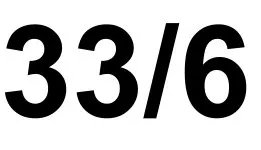
The number 33 is used by Ku Klux Klan adherents to signify the Ku Klux Klan. Since the 11th letter of the alphabet is K, three Ks signify "KKK" or the Ku Klux Klan. When using this reference, Klan members will frequently add the number 6 at the end, as in 33/6, because they think the Klan is currently in its sixth historical "era." Less commonly, some holdouts may still use the numeric code 33/5. Additional Images:
AKIA is Ku Klux Klan shorthand for "A Klansman I Am." It is related to another Klan acronym, AYAK ("Are You A Klansman?"). These are among the many acronyms developed by the Second Ku Klux Klan that emerged in 1915. Although the Second Ku Klux Klan did not survive, much of its terminology and many of its rituals did, and later Klan groups freely used them. Additional Images:
AYAK is Ku Klux Klan shorthand for "Are You A Klansman?" It is related to another Klan acronym, AKIA ("A Klansman I Am"). These are among the many acronyms developed by the Second Ku Klux Klan that emerged in 1915. Although the Second Ku Klux Klan did not survive, much of its terminology and many of its rituals did, and later Klan groups have freely used them. Additional Images:
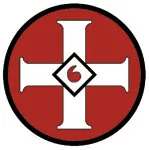
ALTERNATE NAMES: Ku Klux Klan, MIOAKGroup Status: Active (in that there are many active Ku Klux Klan groups)
For the past century, the primary symbol related to Ku Klux Klan groups (other than Klan robes themselves) is what Klan members may call the MIOAK (an acronym for "Mystic Insignia of a Klansman"). It is more commonly referred to as the "Blood Drop" Cross. It appears as a square white cross in black outline against a circular red background. In the middle of the cross is what appears…
ALTERNATE NAMES: Ku Klux Klan, MIOAK
Read more about Blood Drop Cross

The image of the burning cross is one of the most potent hate symbols in the United States, popularized as a terror image by the Ku Klux Klan since the early 1900s. Cross-burnings (called "cross-lightings" by Ku Klux Klan groups, to make it seem as if they are not destroying a Christian cross) have long been used as a traditional symbol by Klan groups, used both in Klan rituals as well as in attempts to intimidate and terrorize victims of Klan groups. So widely associated with racial…

ALTERNATE NAMES: For God, Race and NationFGRN is a Ku Klux Klan acronym for "For God, Race and Nation," a common Klan slogan. It is one of a number of slogans, codes and rituals created by the Second Ku Klux Klan in the early 20th century. That Klan did not survive, but many of its codes and rituals were adopted by later Klan groups. In acronym form, the slogan is used primarily as a Klan identifier, typically appended at the end of on-line messages and postings. Additional Images:
ALTERNATE NAMES: For God, Race and Nation
Read more about FGRN

ITSUB is a Ku Klux Klan acronym for "In The Sacred Unfailing Being," a reference to God. It is one of many Klan acronyms created by the Second Ku Klux Klan that emerged in 1915. That Klan did not survive, but subsequent Ku Klux Klan groups continued many of its rituals and codes. Today, ITSUB has no real meaning or particular purpose and is typically used by Klan group members in on-line messages or posts solely as a way to identify themselves with the Ku Klux Klan. This has been the fate of a…

KABARK is a Ku Klux Klan acronym for "Konstantly Applied By All Regular Klansmen." It is one of many acronyms and codes developed by the Second Ku Klux Klan in the early 20th century. The Second Ku Klux Klan did not survive, but later Klan groups continued many of its codes and rituals. Today, KABARK is essentially meaningless and only used as a "sign off" in on-line messages by Klan group members, along with several other similar archaic acronyms. Additional Images:

KIGY is Ku Klux Klan shorthand for "Klansman I Greet You." It is one of many acronyms developed by the Second Ku Klux Klan that emerged in 1915. Although the Second Ku Klux Klan did not survive, much of its terminology and many of its rituals did, and later Klan groups freely used them. Additional Images:

KLASP is a Ku Klux Klan acronym for "Klannish Loyalty, A Sacred Principle." It is one of many Klan acronyms created by the Second Ku Klux Klan that emerged in 1915. That Klan did not survive, but subsequent Ku Klux Klan groups continued many of its rituals and codes. Today, KLASP has no real meaning or particular purpose and is typically used by Klan group members in on-line messages or posts solely as a way to identify themselves with the Ku Klux Klan. This has been the fate of a number of…