







Watch a short video of an eighth grader who sees an antisemitic meme in a group chat and decides to speak up. Explore the Pyramid of Hate mini-lesson.
62 Results
BackThis short ADL video gives educators strategies to support Jewish students, lead discussions on Jewish identity and respond to antisemitism and bias.
This short video helps middle and high school students and educators spot antisemitic stereotypes and conspiracy theories hiding in images, memes and jokes.
This short video uses a tree metaphor to show how antisemitism grows and spreads. Designed for middle and high school students and educators.

Digital teaching kits for K-12 educators and families pair curated books with curriculum ideas to explore Jewish identity, the Holocaust and antisemitism.

For more than a century, ADL has exposed and combated the white supremacist movement in all its manifestations, from the Ku Klux Klan of the 1920s and Nazis of the 1930s to the alt right of the 2010s and accelerationist white supremacists of today. White supremacists have long constituted one of the major sources of antisemitism in the United States. Motivated by their extreme ideology, white supremacists have also committed shocking acts of antisemitic violence, such as the deadly mass…

These logos, symbols, imagery and slogans are used by large segments of the antizionist movement, particularly in the wake of Hamas’s October 7, 2023, antisemitic terror attack on Israel. A better understanding of these symbols and slogans can help law enforcement, educators and all community members stay vigilant against attempts to intimidate and frighten. All depicted symbols and slogans should be evaluated carefully in the context in which they are used. Revealed: Antizionist Hate is…

Parents and caregivers: get steps and suggested language to raise concerns with teachers and schools about bias, misinformation and antisemitism in class.
Practical, nonlegal guidance for college and university faculty responding to antisemitism and anti-Israel bias in classroom settings.

A glossary that explains some of the popular terms, references, and images used to signal transgression and belonging in online communities that glorify mass violence and extremist killings.
Recommendations for Healthcare Institutions to Address Antisemitism
Join the ADL Innovation Lab and partner with ADL to equip students with digital literacy skills to combat online mis- and disinformation that lead to hate.
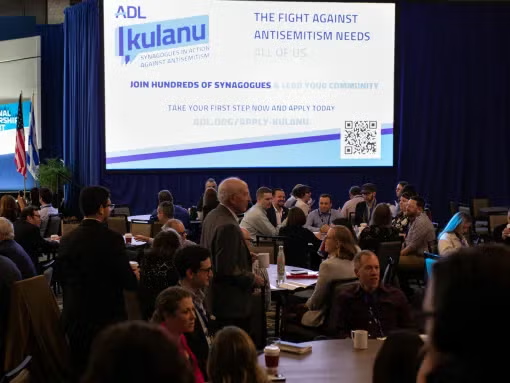
The links on this page will take you to helpful ADL resources to support you as you learn and take action against antisemitism, anti-Zionism and extremism as a Kulanu network member. These resources are not exhaustive. We encourage you to reach out to [email protected] if you cannot find what you are looking for here. ProtectEvery community and individual experiencing antisemitism can turn to ADL for help. By reporting antisemitic incidents and working to detect and disrupt threats, we weaken the…

Disclaimer: This resource is not intended to provide and should not be construed as legal advice. Title VII and Legal Obligations for University DecisionsTenure and promotion decisions are employment actions subject to federal and state anti-discrimination laws. Universities must ensure that faculty evaluation, tenure, reappointment and promotion processes are fair, consistent and free from discrimination based on protected characteristics. Under Title VII of the Civil Rights Act of 1964,…

If you encounter antisemitism or biased content in your college or university classroom experiences, ADL is here to help. Campus Classroom Reporting is designed to help students and other members of campus communities identify and confidentially report concerns about antisemitism or biased content related to Jews and Israel in classroom settings, course materials, assignments, discussions, or faculty conduct. This resource provides guidance on what types of incidents should be reported, why…

Disclaimer: This resource is not intended to and should not be interpreted as providing legal advice. Why Academic Freedom and Antisemitism Matter in Higher EducationUniversities are designed to be spaces for open inquiry, debate, and intellectual challenge. Academic freedom protects the rights of faculty, staff and students to explore controversial ideas without fear of censorship or institutional punishment. At the same time, universities have a responsibility to ensure that members of the…

PurposeThis guide helps you prepare and submit a clear report of antisemitism to your university. You do not need all details to report - share what you know now and add more later. Reminder: You do not need to determine whether an incident was antisemitic or otherwise discriminatory in order to report it. If something felt harmful, targeted, or affected your ability to learn, work, or participate in university life, you can and should report it. The university is responsible for assessing the…

A syllabus shapes how a course frames knowledge, discussion, and acceptable viewpoints. Reviewing it carefully can help identify whether a class supports open inquiry - or risks promoting bias, including antisemitism. Balance of Assigned ReadingsExamine the diversity of sources and viewpoints. Watch for: Readings that overwhelmingly present one political perspective Absence of Israeli, Jewish, or pluralistic scholarly voices in relevant syllabiUse of activist materials presented as…
ProgramsUniversities increasingly rely on trainings for students, staff, faculty and administrators to address antisemitism and related forms of bias on campus. Whether a program is developed internally or delivered by an external provider, institutions benefit from taking a thoughtful, structured approach to reviewing content, pedagogy, and alignment with institutional values. The questions below are designed to support universities in evaluating whether a training is factually accurate,…

ADL's research and data on antisemitism provides a bridge between history, current events, and students' lived experiences. Explore the Global 100.