







Back-to-school resource suite features new research on pathways to violence and practical guidance for parents, educators, community members and law enforcement
New York, NY, September 23, 2026 … The ADL (the Anti-Defamation League) Center on Extremism (COE) today launched a new research and resource hub that offers a deep dive into the online communities influencing young adults and children to engage in targeted and mass violence.
ADL has tracked a disturbing rise in antisemitism and hate in online communities that glorify mass shooters, extremist killers and other perpetrators of mass violence, which further contributes to the normalization and desensitization of this kind of violent content and can inspire deadly attacks. Since 2024, the ADL Center on Extremism has documented dozens of attacks tied to these communities, including school shootings whose perpetrators shared similar online footprints along their pathways to violence. These spaces include gore forums, as well as sextortion and self-harm networks like the Com and 764. A throughline for these networks is the True Crime Community (TCC), a subculture built around a fascination with violent perpetrators and mass killers.
“These online communities are hateful, violent and dangerous pipelines that reward cruelty with status and turn vulnerable children and young adults into either victims or perpetrators, and sometimes both,” said Jonathan Greenblatt, ADL CEO and National Director. “We built this body of research and resources to not only educate parents, educators, community members and law enforcement on how to spot the early warning signs of these threats, but also to support those who may seek help.”
The new resource hub includes:
Comprehensive new research products examining memetic violence (a form of targeted violence driven by a desire for status and notoriety within online communities), the Com, the True Crime Community, the popular gore forum WatchPeopleDie, and the role antisemitism plays in these spaces.
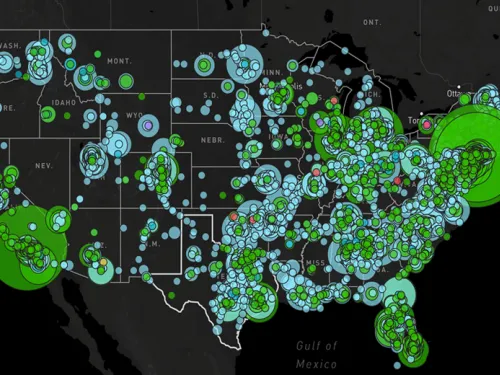
Interactive tools, including a global TCC attacks and plots map, and a memetic violence field guide that decodes the terms, symbols, and phrases used in these online communities to signal transgression and belonging.
Resources that include behavioral threat assessment and management (BTAM) guidance, risk factors and warning signs, information on becoming an upstander, and a curated list of reporting resources.
The ADL Center on Extremism’s team of specialized analysts and experts monitor antisemitism, hate and extremism, tracking threats against the Jewish community and other groups. Since January 2025, ADL shared alerts to law enforcement about eight individuals connected to these online communities, all of whom were ultimately arrested.
“The online spaces that promote hate and glorify violence do not stay online; they fuel and animate acts of violence, posing one of the greatest threats we face to children, targeted communities, and our society as a whole,” said Oren Segal, ADL Senior Vice President, Counter-Extremism and Intelligence. “The first step in pushing back is awareness. We must equip every part of society: parents, educators, communities, technology platforms, policymakers, and others, to recognize how these spaces operate and spot the warning signs. When we understand the pathways from online hate to offline violence, we are better prepared to interrupt them, and together, we can break the chain between hate and violence—and choose a different path forward.”
Awareness and education are also part of a much larger picture in addressing targeted and mass violence, which requires investment, coordination, and accountability across government, schools and the tech industry.
Building on this work, ADL will share this information with Attorneys General and District Attorneys nationwide to raise awareness and encourage them to examine relevant laws that may apply in their states or localities.
Additionally, ADL calls on federal and state lawmakers to:
Expand investments into community-based violence prevention, including federal, state, and local funding for programs, such as those supported by the Department of Homeland Security, that identify at-risk individuals and intervene before violence occurs.
Increase funding for the Nonprofit Security Grant Program (NSGP), which many Jewish institutions, houses of worship and nonprofits rely on to fund their critical security needs, with matching state-level programs to close federal funding gaps.
Pass legislation and implement programs that hold tech platforms accountable for the spread of extremist content and promote transparency in content moderation.
Require stronger platform safeguards against violent online networks by improving policies that promote transparency and incentivize platforms to improve internal coordination, cross-platform signal-sharing and mechanisms for identifying and reporting credible threats.
ADL is the leading anti-hate organization in the world. Founded in 1913 to protect the Jewish people, ADL works to stop the defamation of the Jewish people and secure justice and fair treatment to all. In the face of rising antisemitism and extremism, we protect, advocate, and educate, through a mix of programs and services using the latest innovations and technology, and seek to create a world without hate. More at www.adl.org.