





iStock



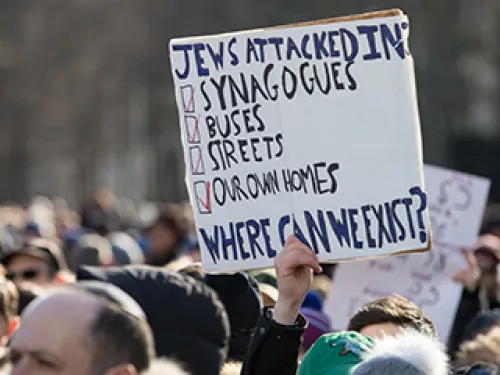
When violence is in the news, it’s important to watch out for biases that are present in and activated by news coverage and commentary. When Israel is in the headlines, antisemitic incidents spike and antisemitic rhetoric on social media also increases. Additionally, geopolitical conflicts in the Middle East often activate bias towards people of Middle Eastern descent. War and violence inspire strong emotions, which can activate conscious and unconscious biases about groups of people. It is essential to be aware of biases that can emerge in order to challenge them.
Bias is universal. It is a conscious and unconscious inclination or preference for or against an individual or group that interferes with impartial judgment. Biases are learned through socialization, the process by which we learn how to behave from direct and indirect messages communicated in the world around us, including family members, friends and neighbors, schools and other learning environments, media of different types and more. Antisemitism and anti-Muslim bias are both common types of biases that have existed in our society for a long time. Even well-meaning people who do not intend to cause harm to Jewish people or to Muslim people may unintentionally communicate biased ideas. It is important for all people to challenge bias when discussing current events.
As geopolitical events are making headlines and discussed on social media, young people may experience biases activated in themselves and others around them. Sometimes without meaning to or sometimes as part of developmentally typical behavior, young people might say or do something that causes harm to their classmates or to the learning environment. Even though bias is widespread, it often follows certain patterns, so adults can learn those patterns and help young people to recognize them too. Examples include:
While violence is taking place, especially far away, unintentional misinformation should be expected. Early reports of violent incidents and acts of war are incomplete, and details may emerge later that complicate or correct previous reports.
First-person eye-witness accounts of violence are often viewed through a lens of trauma, and investigations may later prove that events took place differently.
Scapegoating is the act of blaming an individual or group for something based on that person or group’s identity when the person or group is not responsible. Bias, prejudicial thinking and discriminatory acts can lead to scapegoating.
A stereotype is an oversimplified generalization about a person or group without regard for individual differences.
Exclusion is the act of deliberately separating, avoiding or isolating a person or group based on their identity, denying them the belonging, opportunity and connection afforded to others. It shows up as social avoidance, ostracism or the systematic sidelining of individuals from communities, institutions and everyday life.
As a political or social measure, dehumanization is intended to change the manner in which a person or group of people are perceived, reducing the target group to objects or beings not worthy of human rights.
Oversimplification is the act of reducing a person or group to an overly simple, sweeping generalization that ignores individual differences and lived experience.
What are some steps one can take to interrupt biased language?
When you hear biased language, the first thing to do is to interrupt it immediately so it doesn’t escalate. Bias can lead to more bias!
If there are students who were directly targeted by the biased comments, or students who you think might have been harmfully impacted, take time for individual check-ins.
Revisit the classroom rules or community agreements, especially any specific guidelines that are relevant to the conversation.
After the class or day is over, take some time to consider what educational or community-building experiences students may need in this moment.