Helping Students Make Sense of News Stories about Bias and Injustice
Tools and Strategies
For Educators When there are national news stories that involve incidents of bias and injustice, young people want to be part of the conversation. Even at a young age, they hear adults talking about what’s happening, read about the story on social media or learn about it through television. Rather than protect children and youth from what’s going on in the world, there are age-appropriate and constructive ways to engage them in understanding the situation. Teachers…
Table Talk: Family Conversations about Current EventsThe CROWN Act is a law that forbids discrimination based on hair texture and hair styles. CROWN stands for: “Create a Respectful and Open Workplace for Natural Hair.” Hair discrimination impacts Black people, especially Black women and girls in schools and workplaces who wear hair styles such as locs, braids, twists, Bantu knots, afros and natural hair. They are punished by discriminatory workplace and school dress codes and…
Uses these resources to explore and commemorate the rich history and culture of people who are Arab American as well as analyze the bias and discrimination faced by them.
13 Exceptional Kid Lit Books to Read for Black History Month
Tools and Strategies
January 27, 2022 Using children’s literature to teach about Black history and the Black experience is a great way to open the door to discussions about these experiences and milestones. These books include important insights into Black history, culture, accomplishments, notable people, historical and current day injustice and how that injustice was and continues to be confronted and overcome. Our recommended books include…
Extreme Measures: How to Help Young People Counter Extremist Recruitment
Tools and Strategies
A Toolkit for Educators, Parents and Families Are you concerned about the white supremacist propaganda that young people are seeing online and the ways that extremists may be trying to recruit them?
The purpose of this toolkit is to help educators, parents and families support young people in understanding and resisting domestic extremist recruitment efforts. Our approach is to provide educational information and put tools into the hands of the adults in young people’s lives.
…
November 18, 2021
Now is the time to shine a light on antisemitism through education. This webinar, for middle and high school educators and administrators, highlights the critical importance of antisemitism education in today's world. Offered are practical implementation tools related to ADL Education's programs, online learning and resources as well as specific actions schools can take in support of the "Shine a Light" campaign that takes place throughout the week of Hanukkah…
Table Talk: Family Conversations about Current EventsOnline games have revolutionized the way we connect, compete and experience the world, captivating millions of adults and young people in thrilling virtual adventures that know no boundaries. In fact, the global player base for video games was estimated to reach 3.6 billion people in 2025 and predicted to reach 3.9 billion by 2028. In particular, teenagers are using video games at higher and…
Using Children’s Literature to Foster Empathy and Challenge Anti-Immigrant Bias
Webinar
For Educators July 22, 2021
Moderator: Marsha Frith, Education Director, ADL Florida Office
Panelists: Jill Eisenberg, Director of Curriculum and Literacy Strategy, Lee & Low Books, Areli Morales, author of Areli Is a Dreamer: A True Story by Areli Morales, a DACA Recipient, Jinnie Spiegler, Director of Curriculum and Training, ADL
Children and young adult literature is a compelling entry point for helping young people learn more about people who are immigrants, the…
For Educators July 21, 2021
Moderator: Adam Strom, Director, Re-imagining Migration
Presenters: Erika Lee, Regents Professor, Distinguished McKnight University Professor, Rudolph J. Vecoli Chair in Immigration History and Director of the Immigration History Research Center, University of Minnesota
This webinar examines anti-immigrant bias past and present. In our current climate, voices that were once on the fringe have become mainstream in our political discourse. As…
Short Online Experience to Learn about this Core Topic For Educators | Middle School, High School
About the Mini-Lesson
Only a small portion of an iceberg can be seen above the waterline. Similarly, understanding someone's identity is limited by what we see on the surface. This mini lesson explores the concept of identity and the importance of going "below the waterline" to challenge and avoid stereotypes and identity-based bias.
ADL's mini-lessons are short, interactive, online…
Short Online Experience to Learn about this Core Topic For Educators and Middle and High School Students About the Mini-LessonThe Pyramid of Hate is a powerful framework for understanding how bias escalates—from biased attitudes and stereotypes to discrimination, violence, and even genocide. Through the lens of antisemitism, this mini-lesson helps middle and high school students and educators explore how prejudice grows and intensifies over time, and provides practical strategies to…
Welcoming America is a nonprofit organization which focuses on cultivating an inclusive environment, especially for people who are immigrants. From certified welcoming programs for local governments to annual conferences for sharing successful immigrant stories, Welcoming America is dedicated to providing resources to foster encouraging and empowering communities for immigrants. Welcoming Week, a core initiative of Welcoming America, will…
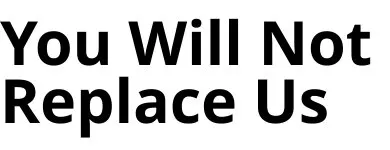
The phrase “You Will Not Replace Us” is a white supremacist slogan referring to the common White supremacist belief that the white race is in danger of going extinct due to rising numbers of non-White people who are controlled and manipulated by Jews. It may also be seen in acronym form as YWNRU.
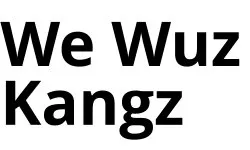
The phrase “We Wuz Kangs” is a racist term meant to attack African-Americans by racist mockery of Afrocentric theories about Egyptian connections to sub-Saharan Africa.
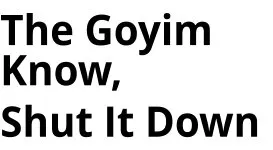
The phrase “The Goyim Know” is an antisemitic phrase portraying the ostensible reaction of Jews when their supposedly conspiratorial or manipulative misdeeds are revealed to the public. Often combined with “Shut It Down.”
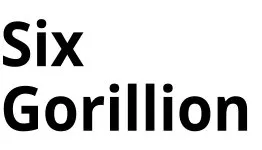
“Six Gorillion” is an antisemitic phrase used by white supremacists to refer to the Jews who died during the Holocaust (typically thought to be around six million). They replace “million” with “gorillion” to give the impression that Jews wildly exaggerate Holocaust-related deaths.
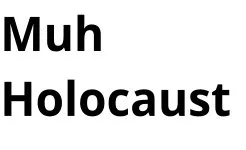
“Muh Holocaust” is an antisemitic phrase popular with the alt right used to convey the bigoted notion that Jews routinely bring up the Holocaust to gain attention or to deflect negative attention.
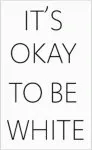
“It’s okay to be white” is a slogan popularized on the website 4chan in 2017 for trolling purposes and which was soon adopted by white supremacists (who had occasionally used the phrase themselves in the past).