





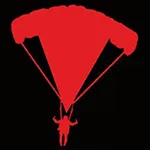
Some supporters of the 2023 Hamas-led terror attacks in Israel have adopted paraglider imagery to celebrate the attacks, as Hamas operatives used gliders to land in Israel to commit violent acts.
101 Results
Back

Alternate Names: 271,000; 271
271k is an antisemitic shorthand reference to a false claim made by Holocaust deniers that only around 271,000 Jews died during the Holocaust rather than the consensus view, based on exhaustive research, that the Nazis killed approximately six million Jews in their extermination campaign.
The number 271,000 stems from a scanned image of part of a 1979 document often shared by Holocaust deniers. The document originated from what is today known as the Arolsen Archives, based in Germany, one of the largest repositories of records related to victims of Nazi persecution. Often attributed to the Red Cross, which administered the Archives for many years, the document provided then-current statistics on the number of victims at 13 concentration camps that the repository had, upon request, confirmed as dead and issued death certificates for (often needed by next of kin to obtain insurance benefits, pensions, etc.). This number was slightly over 271,000 (Holocaust deniers may also circulate a similar document from 1984 with somewhat higher numbers).
As the Arolsen Archives and others have explained, such documents did not list the total number of Jewish victims at these 13 locations, nor did they include victims from the many other concentration camps, death camps, and slave labor camps operated by the Nazi regime, nor figures for the vast numbers of victims who died in ghettoes or were shot outside of camps, especially in the Soviet Union. Holocaust deniers, however, claim that the 271,000 figure represents the totality of Jews who perished under the Nazi regime; many deniers further assert that most of these victims were not killed by the Nazis but rather died of malnutrition or diseases like typhus because of the chaos and dislocation caused by the Allied strategic bombing of Germany in the final year of the war. In other words, they falsely claim that few Jews died during World War II and that most of the deaths that did occur were the fault of the Allies, not the Nazis.
The 271,000 claim is linked to an older false assertion originating with the West German far right in the 1950s that the Red Cross had ostensibly said Jewish victims of the Nazis had not numbered more than 300,000. The Red Cross has repeatedly refuted that fabricated claim. Holocaust deniers say that Canadian Holocaust denier Ernst Zundel uncovered the “271,000” document in the 1980s and used it (unsuccessfully) to defend himself in Canadian trials over his reprinting of a Holocaust denial pamphlet from Great Britain in the 1970s that repeated the older 300,000 claim. The image of the document was later used by other Holocaust deniers, eventually making its way to the internet, where it spread still further. However, it was not until around 2024 that 271k and 271,000 emerged on social media as popular shorthand references to the false claim and as antisemitic references, generally.
Antisemites often use 271k in response to online posts about the Holocaust or the six million Jews who perished in it. Often it appears in language such as “271k at best,” “271k tops, mostly from typhus” or “271k is the best we can do.” It also frequently appears in Holocaust denial memes designed to suggest that the mass murder of six million Jews in such a short time was impossible. One such meme features a worker in a pizza parlor saying “Six million pizzas? The most we can make is 271k.” Variations replace pizzas with other things, such as tea: “Six million cups in five years? Sorry, the most I can make is 271k.” Other memes feature images from the television show Pawn Stars, depicting pawn shop workers from the show saying, “Best I can do is 271,301.” Some people use it to suggest more Jews should be killed, employing phrases such as “271k is not enough.” Since its introduction, use of 271k as antisemitic shorthand has grown rapidly on social media.
As numbers, 271, 271k and 271,000 may have very different meanings in other contexts; they should always be evaluated carefully in the specific context in which they appear.


Alternate Names: NLYS
Never Lose Your Smile is a design/meme consisting of the phrase “Never Lose Your Smile” accompanied by the Totenkopf skull image or, more commonly, merely the bottom half of that skull, which obscures its true nature and thus allows the image to pass unnoticed as a white supremacist symbol. The deceptive nature of this design has also allowed extremists to sell clothing, patches, and other items featuring the image on major internet platforms without triggering moderation.
Some Never Lose Your Smile images may also contain the colors or designs of national flags. Other variations use Totenkopf imagery with a slightly different phrase, such as “Never Lose Your Love” or “Never Lose Your Hope.”
Some white supremacists have also used the phrase alone, without the skull, in circumstances such as screen names. However, use of the phrase by itself without a clear white supremacist context should not be taken for granted as hate-related.
White supremacists likely borrowed this concept from older, non-extremist designs that combined the phrase with non-Totenkopf skull images. Use of the “Never Lose Your Smile” slogan in combination with generic skulls or other non-white supremacist images, such as generic clowns, should not be considered hate related.


ALTERNATE NAMES: Archangel Michael's Cross, Iron Guard
St. Michael’s Cross, despite its name, is not a traditional Christian symbol but rather a fascist symbol designed by Corneliu Codreanu (1899-1938), a Romanian right-wing extremist who led the Iron Guard/Legion of St. Michael movement (also known as the Legion of the Archangel Michael) in the 1920s and 1930s. This symbol became the Iron Guard’s logo until the movement was destroyed during World War II.
The Iron Guard combined fascism, nationalism, Eastern Orthodox Christianity and anti-Semitism. Its symbol, St. Michael’s Cross, consists of three vertical lines and three horizontal lines arranged in a hashtag-like pattern. The design was intended to resemble both a cross as well as stylized prison bars; Codreanu was allegedly inspired by either an icon or a vision of St. Michael during his time in prison in the 1920s. The color green is also often associated with the Iron Guard, because of the green uniforms worn by its members (sometimes called “Green Shirts”).
After the end of World War II, right-wing extremists in Western Europe resurrected many of the symbols of fascist movements of the interwar era; following the collapse of communism in Eastern Europe, a similar process occurred in that region. In Romania, right-wing extremists revived St. Michael’s Cross.
Unlike many other fascist or Nazi symbols originating in Europe, the St. Michael’s Cross symbol did not spread much overseas. In the late 2010s, however, some American white supremacists – most notably Matthew Heimbach, who headed a short-lived neo-Nazi group called the Traditionalist Worker Party – “discovered” Codreanu and the Iron Guard, as well as its symbology. Like Codreanu, Heimbach was an avowed adherent of Eastern Orthodox Christianity. A few other American white supremacists trying to blend traditional Christianity with their racist and anti-Semitic beliefs also discovered Codreanu, whose memoirs had been translated into English.
The St. Michael’s Cross symbol received more attention in 2019 following Australian white supremacist Brenton Tarrant’s deadly shooting spree targeting two mosques in Christchurch, New Zealand. Tarrant had painted white supremacist and anti-Muslim symbols and references on various firearms and ammo magazines that he brought with him on his rampage; one of the firearms featured a version of St. Michael’s Cross.


ALTERNATE NAMES: Southern Nationalist Flag, Black Cross
The League of the South is a longstanding neo-Confederate white supremacist group that advocates for a white-dominated, independent South. It originated in the mid-1990s as an organization that typically employed coded racism but took a sharp turn into explicit white supremacy and anti-Semitism in the 2010s.
The logo of the League of the South is the so-called “Southern Nationalist Flag,” created in 2013 by a League member. The design features a black cross—meant to resemble the St. Andrew’s Cross on the Confederate flag—against a white background.
A League-associated social media page claims that the color white in the flag stands for “European heritage, hierarchy, tradition,” while the black stands for “nationalism.” It also claims that “the ‘X’ shape…recalls the Roman numeral X (10), which in French is written as ‘dix,’ as in ‘Dixie.’”
The flag design has been adapted to fit shields, banners, lapel pins and other forms of display. Because some websites now sell versions of the flag as a “Southern Nationalist” flag rather than specifically a League flag, its usage may extend beyond strictly League members.

ALTERNATE NAMES: Jeran Rune
The Jera rune is an ancient European runic symbol, part of the runic alphabet. It also symbolizes concepts such as the harvest or the passage of time.
German ultranationalists of the pre-Nazi period began appropriating various runic symbols to help them create a link to a mythic “Aryan” past; from the 1920s through the 1940s, the Nazi party took such runic appropriation to a new level, incorporating many runic designs into Nazi iconography and symbology. Because the Nazis had done so, later neo-Nazi groups continued the tradition, adopting various runic symbols as logos, including symbols the Nazis themselves did not use.
The Jera rune is one of the less common runic symbols appropriated by modern white supremacists, perhaps because the Nazis do not appear to have used it. In the 2010s, however, white supremacists in Europe and the United States began to use the symbol. In Sweden, for example, the National Youth League (Förbundet Nationell Ungdom), a neo-Nazi group, adopted the Jera rune as its logo. In the United States, the rune began to appear on flyers and cards associated with the alt right segment of the white supremacist movement.
Some white supremacists may use the symbol because its design can conjure the image of a swastika without the symbol actually being a swastika.
Because the Jera rune is used by non-racists as well, including by adherents of modern pagan religions such as Asatru, one should not assume use of the symbol is racist but instead should only judge the symbol carefully in its specific context.


ALTERNATE NAMES: Jew Face, Merchant Face, Le Happy Merchant
The “Happy Merchant” is an antisemitic meme depicting a drawing of a Jewish man with heavily stereotyped facial features who is greedily rubbing his hands together. The meme is by far the most popular antisemitic meme among white supremacists, who have created a nearly endless series of images and variants featuring the “Happy Merchant.”
The meme originated with pen-and-ink artwork by a racist cartoonist who used the pseudonym “A. Wyatt Mann,” exposed by Buzzfeed reporter Joseph Bernstein in 2015 as actually being artist Nick Bougas (allegations of Bougas’ authorship had long predated Bernstein’s article). Mann became known for his grotesquely racist and antisemitic cartoons in the 1980s and 1990s, many of which first appeared in newsletters published by longtime white supremacist Tom Metzger.
The original cartoon featured the Happy Merchant image and a similarly bigoted drawing of an African American, as well as images of a rat and a cockroach. The cartoon contained a racist assertion that substituted the images for certain words to read: “A world without [Jews] and [blacks] would be like a world without [rats] and [cockroaches].” According to the Australian non-profit Online Hate Prevention Institute, this cartoon appeared on Metzger’s website at least as early as 2004 (its first appearance in print was likely earlier).
At some point—Bernstein suggests as early as 2001—someone cropped out all but the Jewish man from the cartoon and uploaded it to the Internet, where it became particularly popular on forums such as 4chan, whose users began modifying and spreading it. It eventually gained the name “Happy Merchant.” It has also been called “Le Happy Merchant,” “Merchant Face” and “Jew Face.”
The Happy Merchant has become nearly ubiquitous in modern online white supremacist and antisemitic iconography. A 2018 study by scholars examining memes displayed in various online communities determined that the Happy Merchant was among the most popular memes on both 4chan and Gab, two major online outlets for alt right expression.
