






Getty Images


The October 7, 2023 attack in Israel marked the deadliest day for Jews since the Holocaust and resulted in the most significant military conflict between Israel and Hamas since its founding. Hamas is an organization dedicated to Israel’s destruction and has been designated by the U.S. and dozens of other countries as a terrorist organization. Since 1994, Hamas has been the main organization perpetrating terrorist attacks on civilian targets in major Israeli cities. And, in 2007, Hamas violently seized control of the Palestinian Authority in the Gaza Strip.
On October 7, 2023, during the Jewish Sabbath and Simchat Torah holiday, Hamas launched an unprecedented surprise attack on Israel. In a coordinated assault, Hamas terrorists breached Israel's security barrier and invaded Israeli communities near Gaza, systematically killing over 1,200 Israelis—including entire families, children, and elderly civilians. At the Nova Music Festival alone, terrorists shot into crowds of young people, killing nearly 400 attendees. On October 7, Hamas took 251 hostages, including children and elderly civilians, dragging them back to Gaza. The attack represented the largest massacre of Jews since the Holocaust. Prime Minister Netanyahu declared a "long and difficult war" and mobilized army reserves for what would become Israel's longest conflict with Hamas.
Following Hamas's call for regional resistance groups to join the attack, Iranian-regime proxy groups across the Middle East began launching attacks on Israel. The Houthis in Yemen started firing missiles and drones at Israeli cities, while Hezbollah increased attacks from Lebanon. This multi-front conflict stretched Israeli air defenses, caused destruction throughout the country and forced civilian evacuations from border areas.
On November 22, 2023, after weeks of intense fighting and international mediation, Israel and Hamas reached a temporary ceasefire agreement. During this pause, 105 hostages were released in stages in exchange for approximately 240 Palestinian prisoners—many of whom had been imprisoned for violent crimes—and a halt in military operations. The ceasefire expired in early December 2023, and combat resumed with continued rocket fire and ground operations.
The war continued throughout 2024, resulting in massive destruction in Gaza and significant Palestinian casualties. Despite Israeli military efforts to provide advance warnings before operations in populated areas, the urban warfare environment and Hamas's strategy of embedding military assets within civilian infrastructure led to substantial civilian harm. Additionally, a humanitarian crisis emerged as aid struggled to reach Gaza's population due to Hamas stealing aid, security concerns, logistical challenges, and restrictions by Israeli forces. The Israeli population felt the impacts of the conflict as Hamas continued psychological warfare by releasing propaganda videos featuring hostages, and continued rocket attacks on the country with the help of allies like the Houthis in Yemen.
A second, shorter ceasefire in January 2025 resulted in the release of an additional 33 hostages.
On September 29, 2025, President Trump and Prime Minister Netanyahu announced a comprehensive peace agreement. The United States’ direct involvement proved crucial in achieving the breakthrough that had eluded negotiators for months, utilizing the diplomatic relationships and regional partnerships established through the Abraham Accords to pressure all parties toward a resolution.
On October 13, 2025, the first phase of implementation began with Hamas releasing the remaining 20 living hostages in exchange for Israel's withdrawal of forces from Gaza, significantly increased humanitarian aid access to the Strip, and the release of approximately 2,000 Palestinian prisoners, including approximately 250 convicted murderers. Hamas also began releasing the remains of 28 hostages who were murdered by Hamas on October 7 or during their time in captivity. While Hamas has repeatedly violated the ceasefire agreement - including staging the "recovery" of a hostage's body - as of this writing, the ceasefire is still in place.
The United States and Israel share a strong relationship built on fundamental democratic values including free elections, freedom of speech, religious freedom, and protection of minority rights. Throughout Israel's existence, the U.S. government has leveraged this partnership to promote greater peace and stability in the Middle East—including when President Truman recognized Israel in 1948-49 to when President Clinton facilitated the Oslo Accords in 1993-95 to when President Trump brokered the Abraham Accords in 2020. These efforts to normalize relations between Israel and its regional neighbors aim to promote stability in a challenging region while protecting a reliable democratic ally. This historical alliance provided the United States with the diplomatic foundation necessary to help broker the ceasefire agreement between Israel and Hamas.
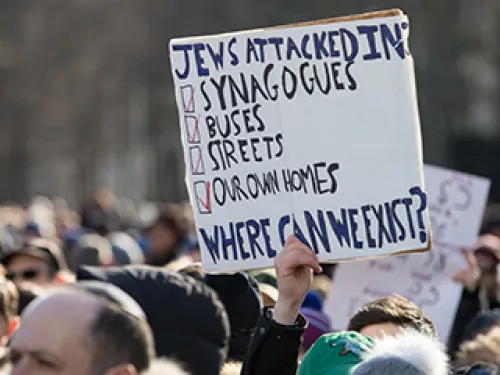
The attack and subsequent war had profound global effects, triggering a sharp worldwide increase in antisemitic incidents and anti-Israel sentiment, particularly in the United States of America. While the majority of Jews in the world live in Israel, the United States has the next highest population, with additional significant populations in countries like France, Canada, the United Kingdom and Argentina. According to Pew Research Center’s 2023 follow-up to their 2020 survey into attitudes towards Israel, for the majority of Jewish people in the world, Israel is a core part of their Jewish identity. The escalation of both antisemitism and extreme anti-Israel sentiment that so closely followed the October 7 attack on Israel has, for this reason, felt personal and emotional for many Jewish people around the world and in the United States.
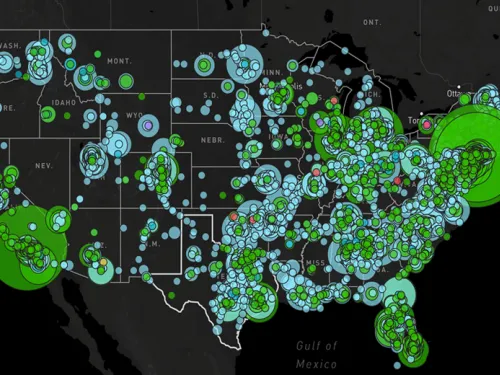
Both online and in community spaces such as schools, college campuses, and local businesses, data from ADL Center on Extremism’s research demonstrates this dramatic increase in antisemitic and anti-Israel activity. ADL’s 2025 Audit of Antisemitic Incidents found that incidents decreased 33% from 2024, but remained considerably higher than incidents in years prior (~70% higher than in 2022). This ‘new normal’ is anything but: 2025 is the third-highest year for antisemitic incidents since ADL began tracking incidents in 1979, nearly double pre-Oct. 7 record highs. ADL’s Global 100 Survey from 2025 found that 46% of the world’s adult population – an estimated 2.2 billion people – harbor deeply entrenched antisemitic attitudes, more than double compared to ADL’s first worldwide survey a decade ago and the highest level on record since ADL started tracking these trends globally. These trends demonstrate the fact that conflict in Israel leads to increases in antisemitism globally, as Jews in diaspora are held accountable for the actions of a nation in which they do not reside.
According to an October 2025 report from ADL and the Jewish Federations of North America (JFNA) 55% of Jewish Americans report experiencing some form of antisemitism in the past year. Safety concerns are widespread among American Jews; more than half reported being at least somewhat worried about personal safety, one-third have discussed with others what they would do in a “worst case” scenario, and 14% have developed a plan should they need to flee the country due to rising antisemitism. These rates are significantly higher for those that experienced direct antisemitic harm, underscoring the lasting impact of victimization. Additionally, one in five Jews who wore something distinctively Jewish before October 7 have since taken it off.
While the data above is grim, the report goes on to share some positive findings: American Jews showed great resilience, with 84% of those who were directly harmed in the past year making some positive change because of the antisemitism they experienced. This same study included findings that indicate that one-third of Jews reported increased participation in Jewish life. While antisemitism has grown to record levels, Jewish life and identity continue to thrive in the United States and abroad.
One of the world’s longest running conflicts, the Israeli-Palestinian conflict is an ongoing historical, political, military and geographic conflict in the Middle East, with various efforts at resolution over many years.
The Israeli-Palestinian conflict has a long history and a complicated current reality. Competing narratives, debates over historical legitimacy, security challenges, rights of self-determination and failed peace efforts make this topic particularly sensitive, multi-layered, complex and difficult to understand without more background knowledge and context.
The conflict has always caused strong emotions, differing perspectives and opinions—and in recent years, a heightened level of intensity and vitriol around the topic. As a result, when there is an increased threat and activity in this region, bias can be ignited, with antisemitic incidents perpetrated in the U.S. and around the globe. Antisemitic and anti-Muslim sentiments can also show up in the media, online, in conversations and from those in positions of power.
This can be a complex topic to unpack and discuss among adults and young people. If you wish to go further, below are some background and education-related resources that may be helpful:
Age
11 and up
Questions to Dig Deeper
(See the Related Content for more information.)
Ideas for Taking Action
Ask: What can we do to help? What individual and group actions can help make a difference?